
 Save to Pinterest
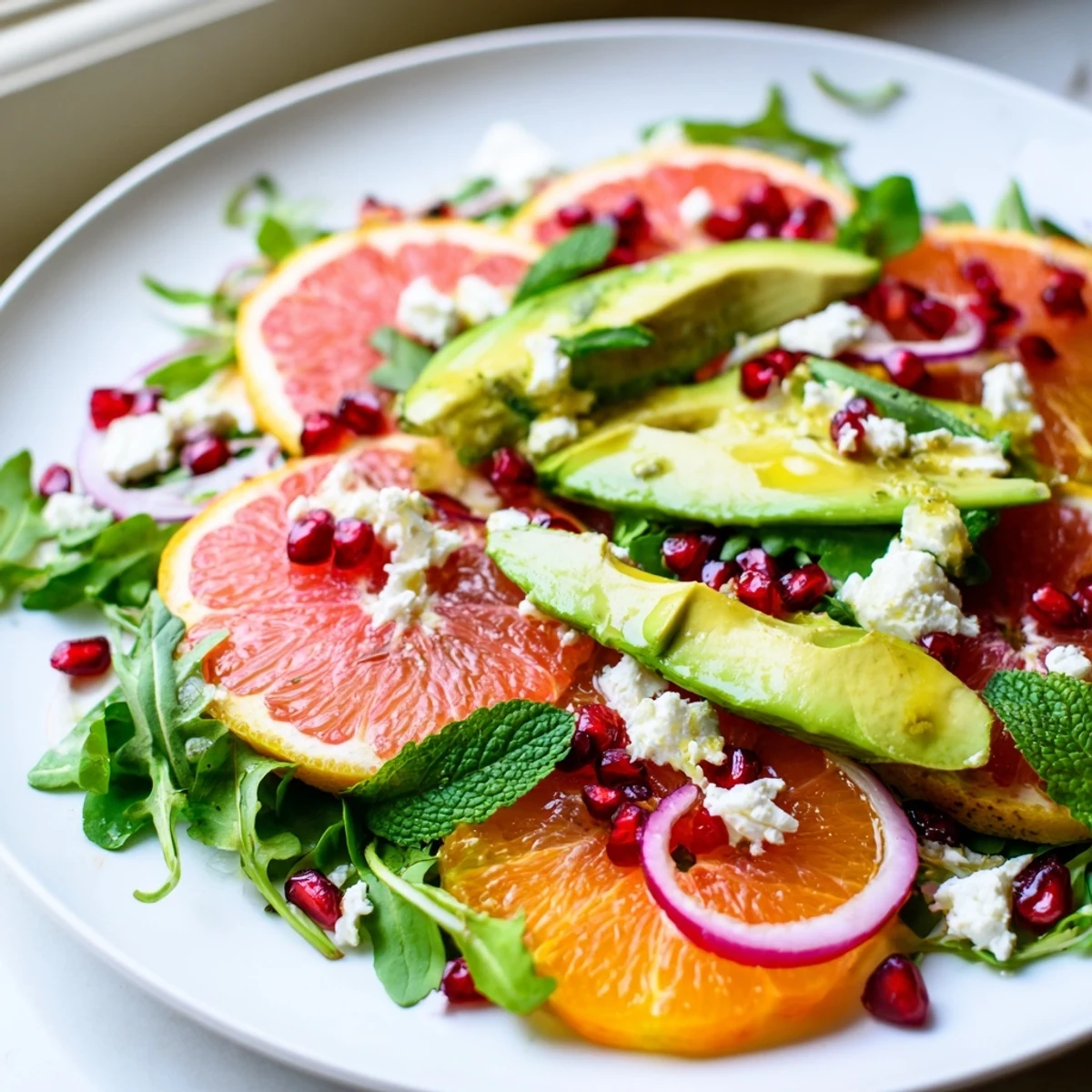
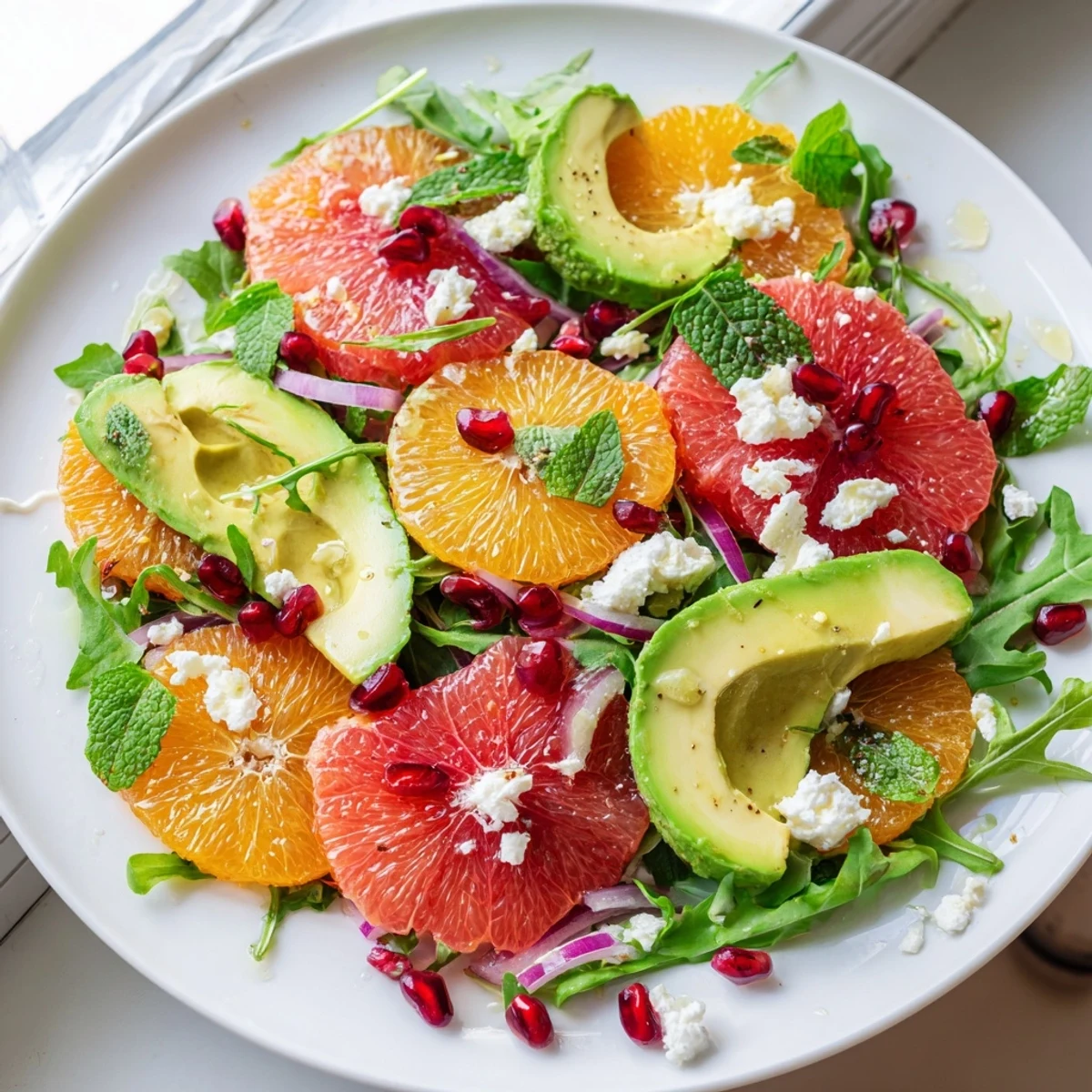
 This refreshing Mediterranean salad comes together in just 15 minutes with no cooking required. Juicy orange and grapefruit slices are layered over peppery arugula, then topped with creamy avocado, jewel-like pomegranate seeds, and crumbled feta cheese.
A simple dressing of extra virgin olive oil, fresh lemon juice, and honey ties everything together. The combination of sweet, tart, salty, and creamy elements makes every bite interesting.
Perfect as a starter for four or a light lunch, this dish is naturally vegetarian and gluten-free.
The farmers market in January is usually a bleak affair, but one Saturday I stumbled on a vendor stacking blood oranges next to a tub of pomegranate arils so ruby red they looked fake. I grabbed everything in sight, walked home with stained fingers and a ridiculous grin, and threw together this salad before lunch. That afternoon my kitchen smelled like sunshine and rebellion against winter. It has been on heavy rotation ever since.
I brought a towering platter of this to a friends potluck last spring, and three people pulled me aside to ask for the recipe before dessert was even served. One of them admitted she had been eating it in her head for two days straight afterward. That is the kind of quiet power a good salad holds.
Ingredients
- 2 large oranges: Peel them over a bowl to catch every drop of juice, because that liquid gold matters.
- 2 medium pink grapefruits: Slice away all the pith, since the bitter white layer will hijack the sweetness you are after.
- 1 small blood orange (optional): Include it if you can find one, because the deep magenta rings turn a simple salad into something striking.
- 1 ripe avocado: Choose one that yields slightly when pressed but has no mushy spots, since firm avocado holds its shape on the platter.
- ½ cup pomegranate arils: Tap the seeds out over a bowl of water to keep your kitchen from looking like a crime scene.
- ¼ small red onion, thinly sliced: Soak the slices in ice water for five minutes if you want to tame their sharp bite.
- 2 cups baby arugula or mixed greens: Arugula adds a peppery edge that plays beautifully against the sweet citrus.
- ½ cup feta cheese, crumbled: Crumble it yourself from a block rather than buying pre-crumbled, because the texture is creamier and the flavor is louder.
- 3 tbsp extra virgin olive oil: Use the good bottle here since the dressing is raw and every nuance comes through.
- 1 tbsp fresh lemon juice: Fresh is non-negotiable, as the bottled version tastes flat and metallic beside real citrus.
- 1 tsp honey or maple syrup: A small amount bridges the gap between the sharp dressing and the sweet fruit without making anything cloying.
- ½ tsp sea salt and ¼ tsp black pepper: Season the dressing before you pour it, because trying to fix a bland salad after plating is a losing battle.
- 2 tbsp fresh mint leaves, torn (optional): Tear them rather than chopping, because bruised mint releases fragrance without turning black at the edges.
Instructions
- Whisk the dressing into existence:
- Combine the olive oil, lemon juice, honey, salt, and pepper in a small bowl and whisk until the mixture turns cloudy and slightly thickened. Taste it on your fingertip and adjust if needed, since dressings behave differently depending on the acidity of your lemon.
- Build the citrus foundation:
- Arrange the orange, grapefruit, and blood orange slices in overlapping circles across a large platter, letting the colors mingle naturally. Scatter the arugula and red onion over the top so the greens tumble into the gaps between fruit.
- Layer on the jewels:
- Tuck avocado slices into the folds of citrus and greens, then shower everything with pomegranate arils, letting them land wherever they please. The random scatter looks more inviting than careful placement ever could.
- Dress and finish:
- Drizzle the dressing in a wide zigzag across the entire platter rather than pouring it in one spot. Crumble the feta over the top with your fingers, letting some pieces stay large and others turn to dust, then scatter the torn mint if you are using it.
- Serve immediately:
- Carry the platter to the table right away because avocado begins to oxidize and citrus juices will pool at the bottom if it sits too long. This salad waits for no one.
 Save to Pinterest
 Somewhere between the sticky countertops and the pile of rinds in the sink, this salad stopped being just a recipe and started being my answer to every gray afternoon that needs a little color.
Great Additions Worth Trying
Toasted pistachios or walnuts scattered over the top add a crunch that makes each bite more interesting, and a handful of toasted sesame seeds works too if nuts are off the table. A friend once added sumac to the dressing on a whim, and the tangy purple dust was so good I nearly resented her for improving something I thought was finished.
Making It Vegan
Swap the feta for a plant-based crumble or simply leave it off and add a generous pinch of flaky salt instead, since the saltiness is what you are really chasing. Replace the honey with maple syrup and you have a fully vegan salad that loses nothing in flavor.
Choosing and Storing the Fruit
Pick citrus that feels heavy for its size, because weight means juice, and juice means flavor that sings rather than whispers. Keep pomegranate arils in an airtight container in the fridge for up to five days, and use any leftover avocado mashed on toast the next morning.
- Squeeze a little extra lemon juice on exposed avocado slices if you need to buy yourself ten more minutes before serving.
- Store the dressing separately in a jar and shake it right before pouring if you are prepping ahead for a gathering.
- Remember that this salad is best eaten the moment it is assembled, so plan accordingly and do not expect tidy leftovers.
 Save to Pinterest
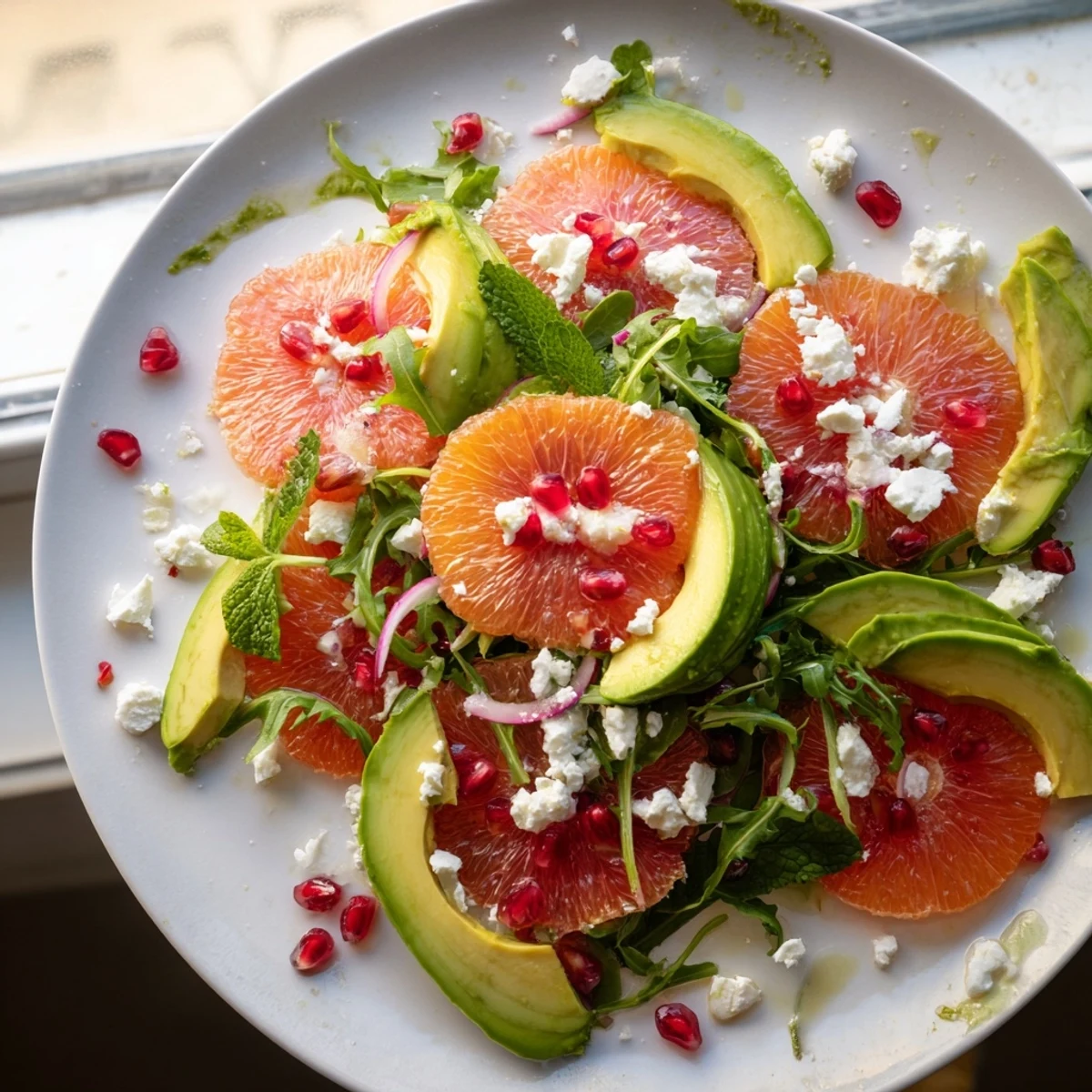
 Set this platter down in the middle of any table and watch people lean in, because food this colorful does not need an introduction. It only needs someone willing to peel a few oranges.
Recipe Questions & Answers
- → Can I prepare this salad ahead of time?
-
You can prep the components in advance — segment the citrus, slice the onion, and whisk the dressing. Store each separately in the refrigerator. Assemble everything just before serving to keep the avocado from browning and the greens from wilting.
- → What's the best way to extract pomegranate arils?
-
Cut the pomegranate in half horizontally. Hold one half cut-side down over a bowl and tap the back firmly with a wooden spoon. The arils will fall out easily. Remove any white pith that falls in before adding them to the salad.
- → How do I keep the avocado from turning brown?
-
Slice the avocado right before assembling the salad. The lemon juice in the dressing also helps slow oxidation. If you must prep ahead, toss the sliced avocado in a little lemon juice and store it in an airtight container.
- → What can I substitute for feta cheese?
-
Crumbled goat cheese works beautifully and adds a tangier flavor. For a dairy-free option, try a plant-based feta alternative or simply leave it out and add a sprinkle of toasted pistachios for richness and crunch.
- → Which citrus fruits work best in this salad?
-
Navel oranges and pink or ruby red grapefruits are ideal for their sweetness and vibrant color. Blood oranges add a stunning visual element when available. Avoid overly tart varieties like white grapefruit unless you enjoy that sharpness.