
 Save to Pinterest
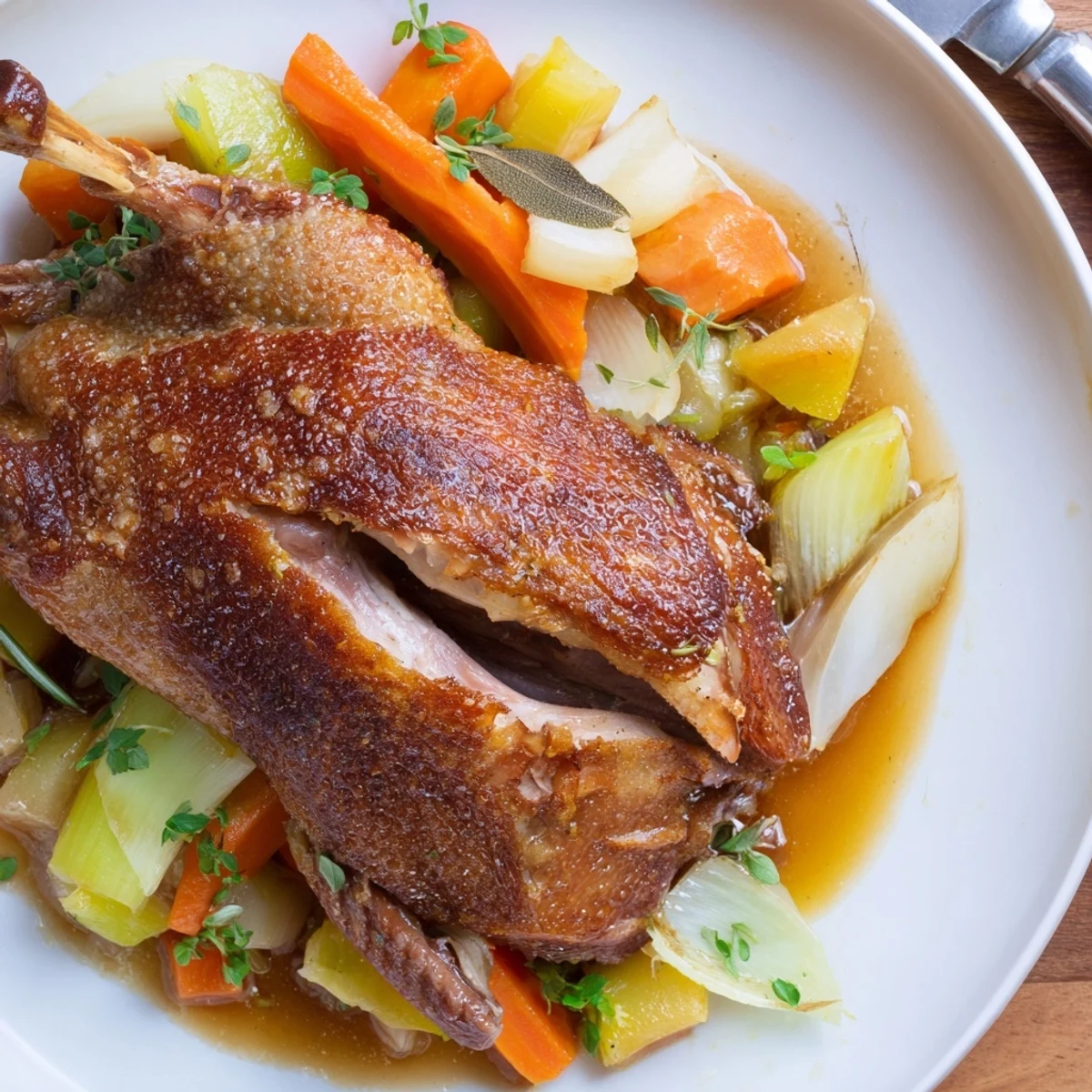
 Start by patting the duck dry and seasoning well. Sear breast-side down in a heavy pot until the skin is deeply browned, drain excess fat and sauté carrots, parsnips, leeks, onion and garlic. Deglaze with white wine, return the bird atop the vegetables, add stock and herbs, then cover and braise gently for 1½–2 hours. Finish uncovered at high heat to render fat and crisp the skin. Rest before carving; spoon cooking juices and vegetables alongside. Parboiling briefly helps achieve extra crispness.
The crackling sound of duck skin hitting a hot pan is something you never forget once you hear it, like crumpling parchment paper but deeper, richer, full of promise. My neighbor Jean Pierre heard that sound through our open kitchen window one Sunday and wandered over with a bottle of Chenin Blanc before I even knew he was outside. That afternoon turned into an impromptu braising session that lasted until the sun went down.
Jean Pierre stood in my kitchen holding that wine bottle and told me, in his thick accent, that the secret was patience, not technique. He was right. The duck does most of the work itself while it braises, and you just have to trust the process and let time do what it does.
Ingredients
- 1 whole duck (about 4 to 5 lbs), trimmed of excess fat: A good quality duck makes all the difference, and ask your butcher to trim it if you are nervous about the knife work.
- 1.5 tsp kosher salt and 0.5 tsp freshly ground black pepper: Season more generously than you think, especially inside the cavity where a lot of flavor gets locked in.
- 4 medium carrots, peeled and cut into chunks: Chunky cuts hold their shape during the long braise better than thin slices ever could.
- 3 parsnips, peeled and cut into chunks: Parsnips bring a subtle sweetness that carrots alone cannot quite match.
- 2 leeks, white and light green parts only, cleaned and sliced: Slice them in half lengthwise and rinse thoroughly under running water because grit hides in every layer.
- 1 yellow onion, quartered: Leave the quarters large so they melt into the braising liquid without dissolving completely.
- 3 celery stalks, cut into 1 inch pieces: Celery might seem like a background player but it adds a savory depth that you would miss if it were gone.
- 6 garlic cloves, smashed: Smashing rather than mincing lets the garlic release its flavor slowly without burning or turning bitter.
- 2 tbsp olive oil: Just enough to get the sear started before the duck renders its own magnificent fat.
- 1 cup dry white wine: A Loire Valley Chenin Blanc is ideal here, and whatever you cook with should be good enough to drink.
- 2 cups low sodium chicken stock: Low sodium lets you control the salt level, and the braising liquid reduces into something that tastes like liquid gold.
- 2 sprigs fresh thyme, 2 sprigs fresh rosemary, and 1 bay leaf: Fresh herbs are non negotiable here because dried cannot replicate the fragrance that fills your kitchen.
- Fresh parsley, chopped (optional garnish): A sprinkle of bright green at the end makes everything look as good as it tastes.
Instructions
- Get the oven ready:
- Preheat your oven to 350F (175C) and make sure the rack is positioned in the lower third so your Dutch oven fits comfortably.
- Prep and season the duck:
- Pat the duck bone dry with paper towels, pressing firmly to remove every trace of moisture, then season all over and inside the cavity with salt and pepper.
- Start the sear:
- Heat olive oil in a large Dutch oven over medium high heat until it shimmers, then lay the duck in breast side down and listen for that satisfying sizzle.
- Brown it beautifully:
- Sear for 5 to 7 minutes until the breast skin is deeply golden and crisp, then flip and brown the other side for another 5 minutes before removing the duck to a plate.
- Manage the fat:
- Pour off all but about 2 tablespoons of the rendered duck fat, saving the rest in a jar because it is liquid treasure for roasting potatoes later.
- Build the vegetable base:
- Add carrots, parsnips, leeks, onion, celery, and garlic to the pot and sauté for 7 to 8 minutes, letting them pick up color and begin to soften.
- Deglaze with wine:
- Pour in the white wine and scrape up every last brown bit from the bottom of the pot because that fond is concentrated flavor you cannot afford to lose.
- Nestle and add liquid:
- Return the duck to the pot resting on top of the vegetables, then pour in the chicken stock and tuck the thyme, rosemary, and bay leaf around it.
- Braise low and slow:
- Cover the pot and transfer it to the oven for 1.5 hours, pulling it out halfway through to baste the duck with the surrounding juices.
- Crisp the finish:
- Remove the lid, crank the oven up to 425F (220C), and roast uncovered for 20 minutes until the duck skin blisters and turns a gorgeous deep amber.
- Rest and serve:
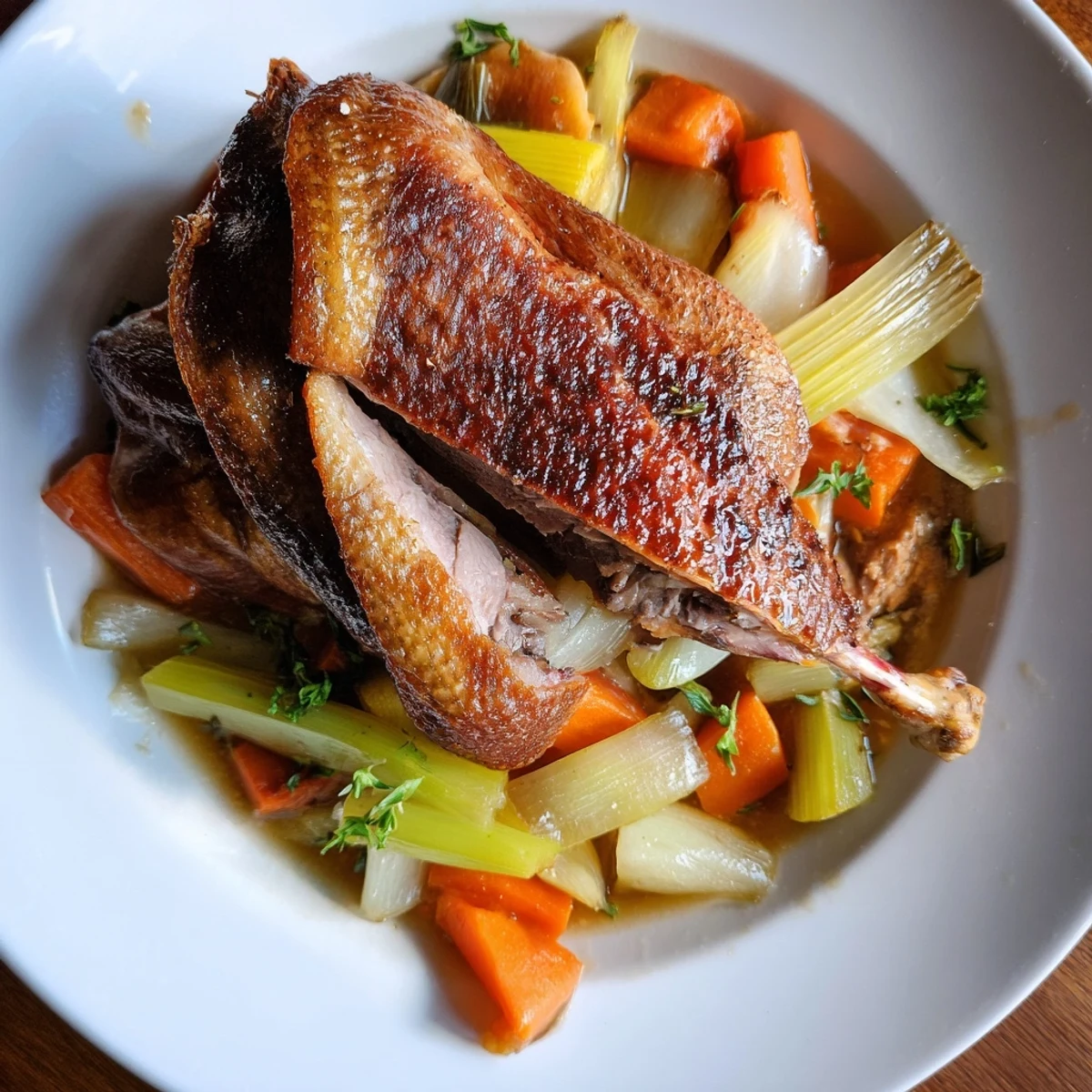
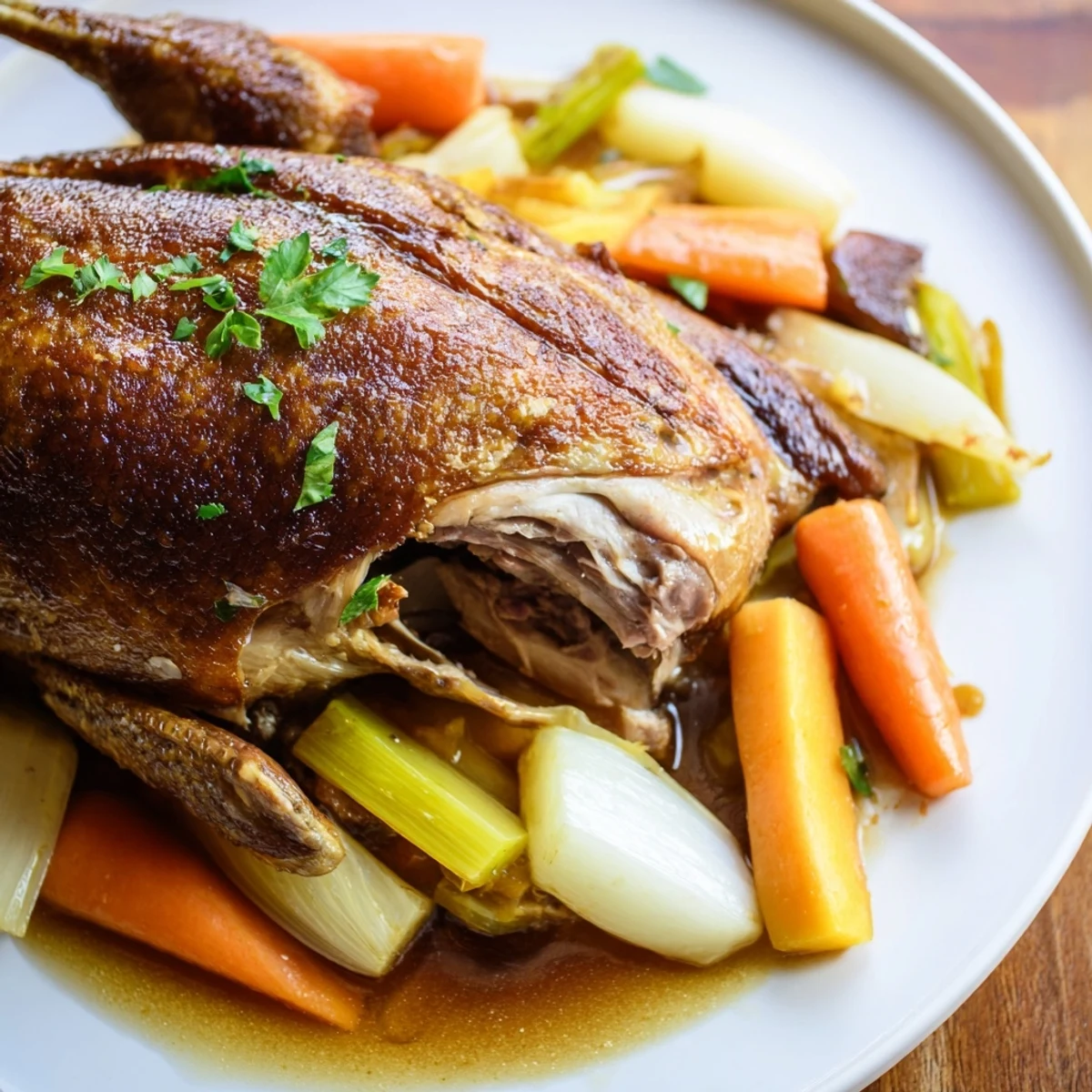
- Take the duck out and let it rest for 10 minutes before carving, then serve over the braised vegetables with ladles of the cooking juices and a scatter of fresh parsley.
 Save to Pinterest
 When Jean Pierre finally sat down at my table and tasted the duck, he nodded once and said nothing, which from a Frenchman is the highest compliment I have ever received.
Choosing the Right Pot
A heavy Dutch oven is your best friend here because it distributes heat evenly and holds a tight seal during the braise. If you do not have one, any heavy ovenproof pot with a snug lid will work, but avoid anything lightweight because it will let steam escape and the duck will dry out.
Wine Pairing Suggestions
The Chenin Blanc Jean Pierre brought was not a random choice, as its bright acidity cuts right through the richness of the duck. A light Pinot Noir works too if you prefer red, especially one with earthy notes that echo the root vegetables.
Making It Your Own
Root vegetables are endlessly flexible, so use whatever looks good at the farmers market or needs clearing from your crisper drawer. The technique stays the same no matter what you toss in.
- Turnips add a peppery bite that pairs beautifully with the sweet parsnips.
- Waxy potatoes like Yukon Gold hold their shape and soak up flavor like sponges.
- Always taste the braising liquid for salt before serving, because the reduction concentrates everything.
 Save to Pinterest
 Some recipes become part of your story, and this one will always taste like that Sunday afternoon, open windows, and a neighbor who became a friend over a shared pot of duck.
Recipe Questions & Answers
- → How do I get extra crispy skin?
-
Pat the skin very dry, season well, and render fat by searing breast-side down. A brief parboil or dry air-chill before cooking helps; finish at high oven temperature uncovered to crisp and brown the skin.
- → Can I substitute the vegetables?
-
Yes — swap in turnips, potatoes or rutabaga for similar texture. Choose firm root vegetables cut into even pieces so they braise uniformly alongside the bird.
- → What wine pairs best with the dish?
-
A Loire Valley Chenin Blanc or a light Pinot Noir complements the rich duck and aromatic root vegetables without overpowering the flavors.
- → How long should I braise the duck?
-
Braise covered at moderate heat for about 1½ hours until the meat is tender; adjust to 1¾–2 hours for larger birds. Finish uncovered at higher heat for 15–25 minutes to crisp the skin.
- → Should I remove rendered fat before braising?
-
Pour off most of the excess fat, leaving a couple of tablespoons to sauté the vegetables and add flavor. Reserve excess fat for other uses if desired.
- → Any tips for serving?
-
Let the bird rest 10 minutes before carving to redistribute juices. Serve with the braised vegetables and spoon the cooking juices over slices; garnish with chopped parsley for brightness.