
 Save to Pinterest
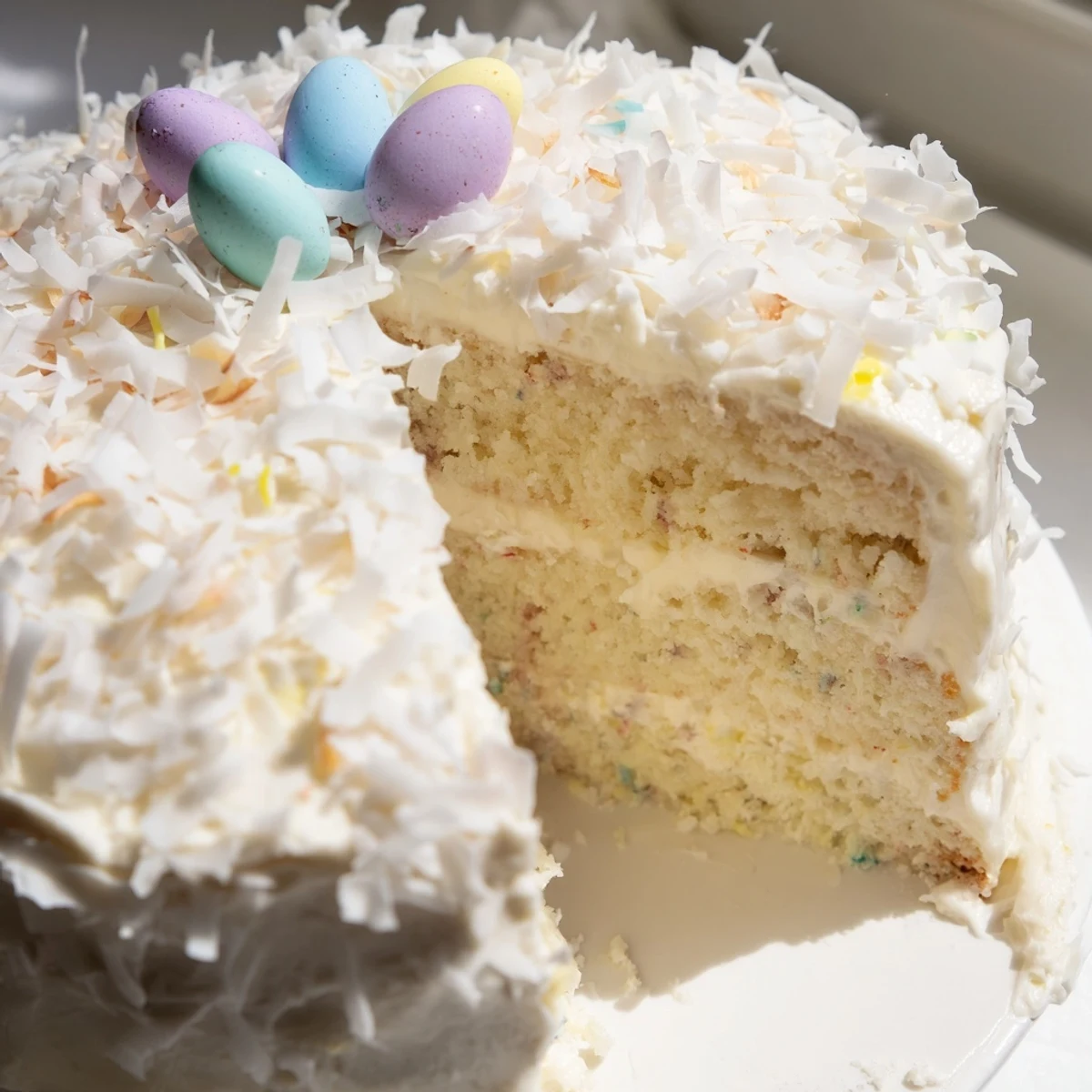
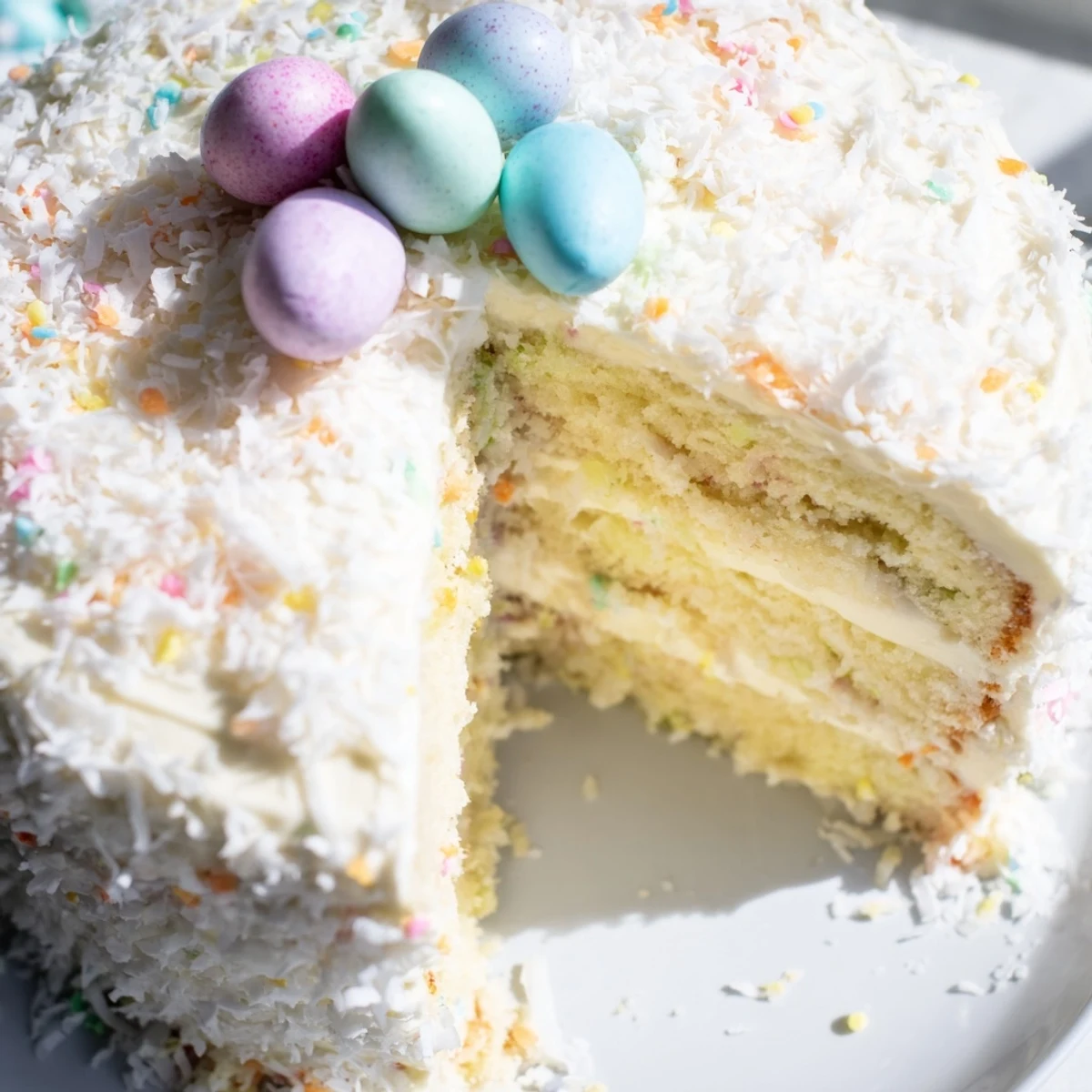
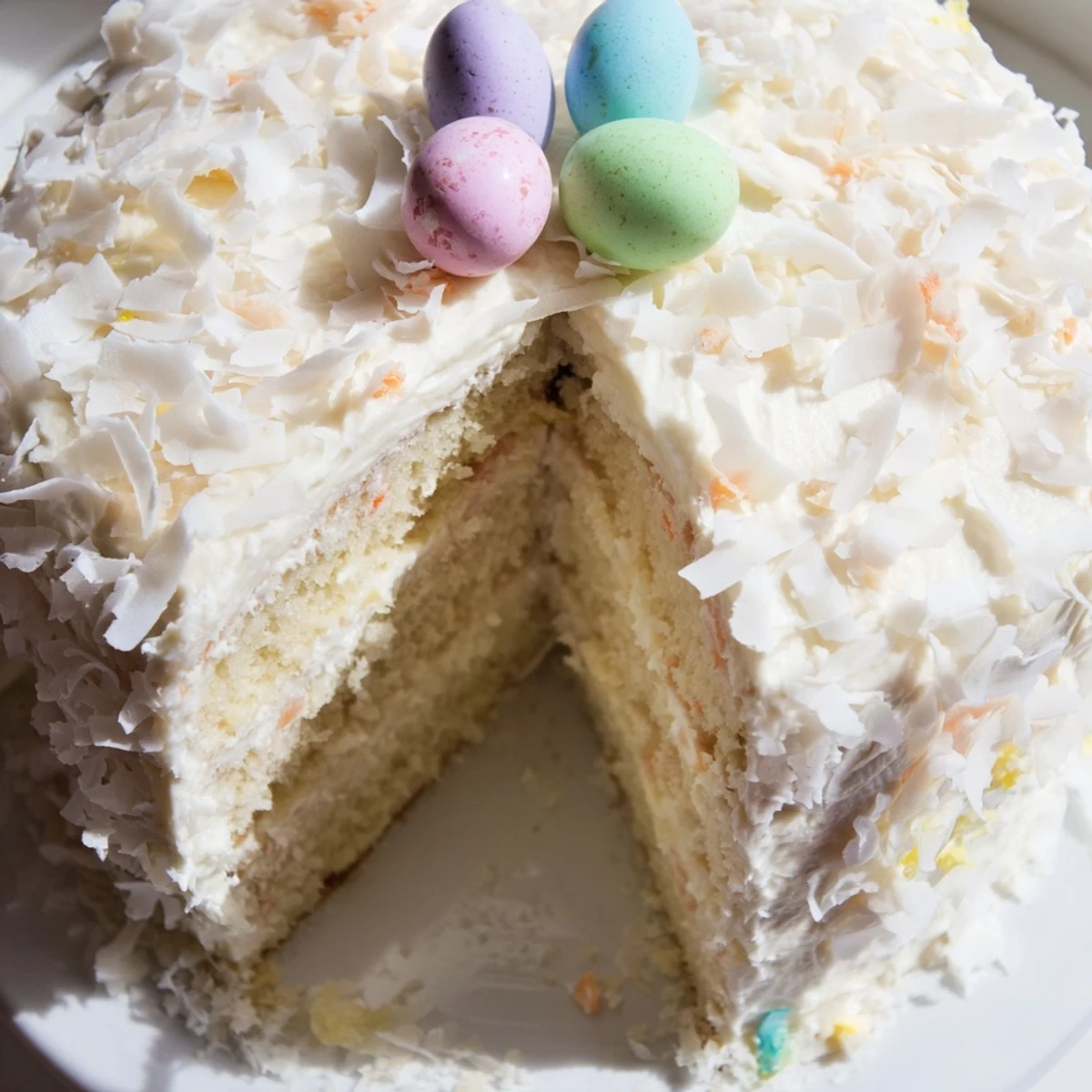
 This Easter-inspired coconut cake features a tender, moist crumb enriched with creamy coconut milk and shredded coconut. Layers are topped with smooth, rich frosting infused with vanilla and coconut extracts, finished with toasted sweetened coconut flakes for an added texture and festive look. The moderate prep time and straightforward steps make it ideal for celebrations and gatherings requiring a flavorful, elegant dessert.
The kitchen was filled with the sweet aroma of coconut the first time I attempted this Easter cake. My daughter hovered around the oven, watching through the glass door as the layers rose and turned golden. We made such a mess with the toasted coconut flakes scattered everywhere, but the moment we took that first bite, I knew this recipe would become our holiday tradition.
Last spring, I made three of these cakes in one week for different family gatherings. My aunt usually claims she does not like coconut anything, but she went back for seconds and actually took a slice home. Now she asks about it in February, and I have to remind her that good things come to those who wait until Easter brunch.
Ingredients
- 2 1/2 cups all-purpose flour: Spoon and level your flour instead of scooping directly to avoid dense cake layers
- 2 tsp baking powder and 1/2 tsp baking soda: This double-leavening combo gives the cake its impressive rise and tender texture
- 1 cup unsalted butter, softened: Room temperature butter creates the perfect crumb structure, so set it out at least an hour before baking
- 1 3/4 cups granulated sugar: Cream this thoroughly with the butter to incorporate tiny air pockets that make the cake light
- 4 large eggs: These must be room temperature too, or they will curdle the butter mixture and affect the final texture
- 1 tsp vanilla and 1 tsp coconut extract: The double extract approach gives background coconut flavor without being overpowering
- 1 cup canned coconut milk: Shake that can like you mean it before opening to distribute the cream evenly throughout the liquid
- 1 cup sweetened shredded coconut: Fold this in gently at the end to maintain those lovely tender pockets throughout the crumb
- 8 oz cream cheese: Full fat cream cheese makes frosting that actually holds up to layering without sliding off the cake
- 4 cups powdered sugar: Add this gradually while mixing to avoid a sugar snowstorm in your kitchen
- 1 1/2 cups shredded coconut for decoration: Toast half of it for a gorgeous two-tone effect that looks professional but takes minutes
Instructions
- Prep your pans like a pro:
- Grease two 9-inch round cake pans thoroughly, dust with flour, and cut parchment circles for the bottoms. This simple step saves so much heartache when it is time to release those layers.
- Whisk the dry team:
- Combine flour, baking powder, baking soda, and salt in a medium bowl. Give it a good whisk to distribute the leavening evenly throughout the flour.
- Cream butter and sugar:
- Beat the softened butter and sugar for about 3 minutes until the mixture looks pale and fluffy. This foundation determines everything, so do not rush this step.
- Add the eggs one at a time:
- Beat each egg completely into the mixture before adding the next. This prevents the batter from separating and ensures a smooth, emulsified texture.
- Layer in the flavor:
- Mix in both extracts before moving on, so the vanilla and coconut flavor permeates the entire batter foundation.
- Combine wet and dry:
- Alternate adding the flour mixture and coconut milk, starting and ending with flour. Mix only until you no longer see dry flour to avoid tough cake layers.
- Fold in the coconut:
- Gently incorporate the shredded coconut by hand with a spatula. This preserves those tender coconut chunks instead of breaking them down completely.
- Bake to golden perfection:
- Divide batter between your prepared pans and smooth the tops. Bake at 350°F for 30 to 35 minutes until a toothpick comes out clean from the center.
- Cool completely before frosting:
- Let the layers rest in their pans for 10 minutes, then turn them out onto wire racks. Warm cake will melt your frosting right off, so patience is your friend here.
- Make the fluffy frosting:
- Beat cream cheese and butter until smooth, then gradually add powdered sugar. Finish with extracts and just enough coconut milk to make it spreadable.
- Assemble with confidence:
- Place one cake layer on your serving plate and frost the top. Add the second layer and frost the entire cake, working quickly before the frosting sets.
- Apply the coconut coating:
- Press shredded coconut gently into the frosting on the top and sides. The coating sticks best when the frosting is slightly tacky but not too wet.
 Save to Pinterest
 My grandmother always said that desserts made with love taste sweeter, and this coconut cake proved her right. Seeing my family gathered around the table, coconut stuck to their chins and frosting on their fingers, that is what Easter tastes like in our house now.
Making This Cake Your Own
The first time I toasted coconut for decoration, I nearly burned it because I walked away to answer the phone. Now I know to stay right there and shake the pan constantly because coconut goes from perfectly golden to charcoal in seconds. You can leave it plain if you prefer a simpler look, but that toasty flavor is worth the extra attention.
Timing Your Easter Baking
After years of scrambling on Easter morning, I learned to bake the cake layers the day before. Wrap them tightly in plastic and they actually develop better flavor overnight. The frosting comes together in minutes, so day-of assembly is stress-free and the cake tastes even more cohesive.
Serving and Storage
This cake actually improves after chilling overnight because the flavors meld together beautifully and the frosting firms up nicely. The texture becomes more fudgy and the coconut flavor permeates every crumb. Serve it slightly chilled or let it sit at room temperature for about 30 minutes before cutting.
- Use a sharp knife dipped in hot water and wiped dry between slices for clean cuts through all that coconut
- If you are transporting this cake, chill it thoroughly first so the frosting sets and nothing slides during the drive
- Leftovers (if you somehow have any) keep beautifully in the refrigerator for up to three days, covered well
 Save to Pinterest
 Whether this becomes your new Easter tradition or just an excuse to bake something coconut-scented, I hope your kitchen smells as wonderful as mine does every spring.
Recipe Questions & Answers
- → How do I keep the cake moist?
-
Using coconut milk and shredded coconut within the batter adds moisture and a tender texture, ensuring the cake stays soft and flavorful.
- → Can I toast the coconut flakes?
-
Yes, toasting the sweetened coconut flakes enhances their flavor and adds a delightful crunchy texture to the topping.
- → What is the best way to frost the layers evenly?
-
Use an offset spatula to spread the creamy coconut frosting smoothly and evenly between layers and on the sides for a polished finish.
- → How long should the cake cool before frosting?
-
Allow the cake layers to cool completely on a wire rack to prevent the frosting from melting or sliding off.
- → Are there any variations to enhance the flavor?
-
Adding a layer of lemon curd between cake layers creates a citrus twist that complements the coconut beautifully.