
 Save to Pinterest
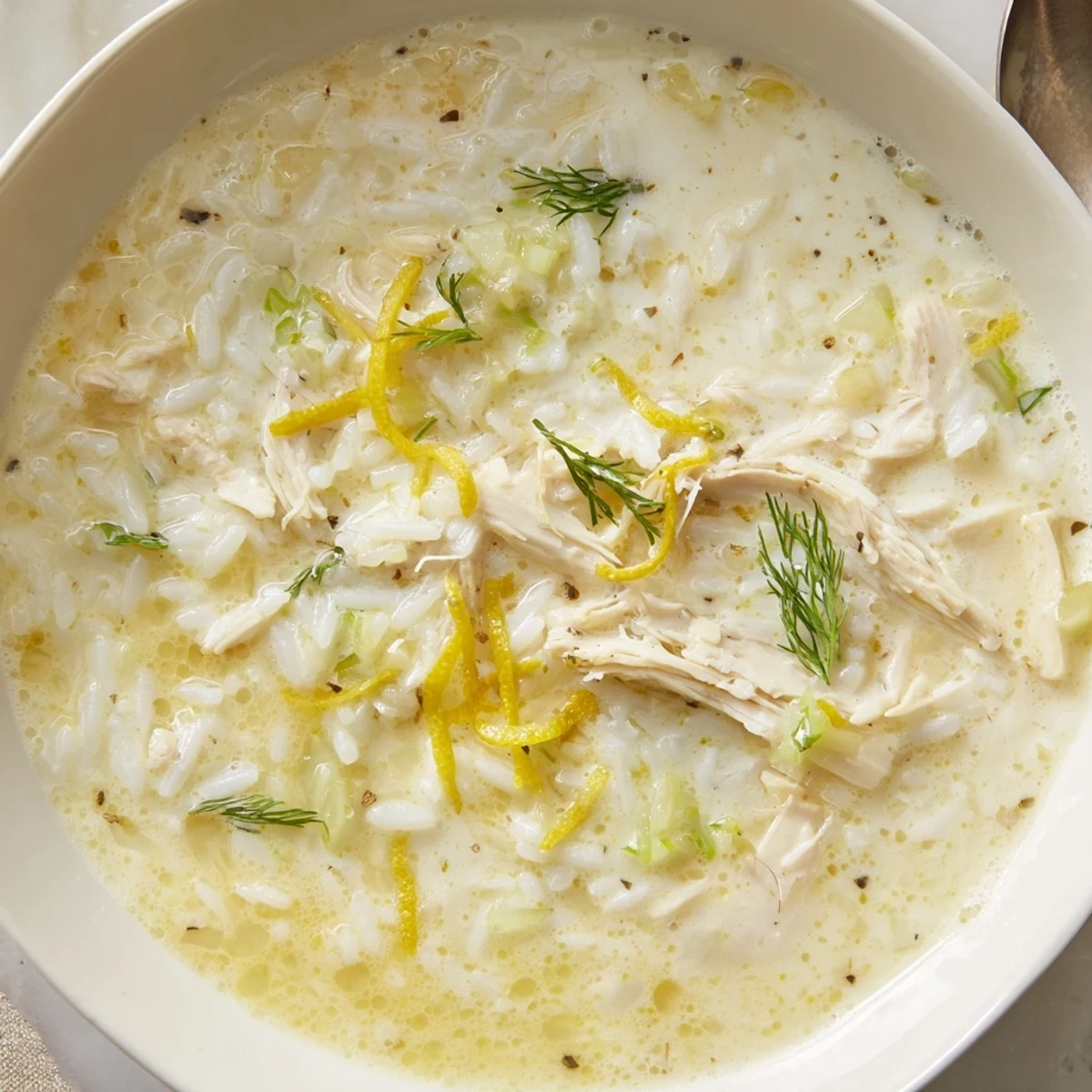
 This Greek avgolemono marries tender poached chicken and rice with a bright egg-lemon emulsion for a silky, tangy broth. Start by simmering chicken in stock, then cook onion, garlic and rice in the strained broth. Temper beaten eggs with hot broth, whisk in lemon, then slowly stir back to thicken without boiling. Finish with fresh dill, adjust seasoning, and serve hot—or swap orzo for rice for a variation.
The rain was hammering against the kitchen window the afternoon my neighbor Elena leaned over the fence and handed me a thermos of something golden and impossibly silky. One sip and I was standing in her grandmother's kitchen in Thessaloniki, or at least that is what she told me with a wink. That thermos kicked off a months long obsession with Avgolemono, the Greek lemon chicken soup that somehow turns humble pantry staples into pure velvet. I have since burned through three dozen eggs figuring out the tempering trick, and I can finally say I have it down.
I made a double batch for a friend who had just come home from the hospital, and she called it a hug in a bowl. We sat on her couch eating it with torn chunks of crusty bread, barely talking, just slurping and sighing. That is the power of this soup: it asks nothing of you but delivers everything.
Ingredients
- 1 lb boneless, skinless chicken breast or thighs: Thighs stay more tender if you tend to simmer a little too long, but breast works beautifully if you watch the clock.
- 6 cups chicken broth: Homemade broth elevates this soup dramatically, but a good quality store bought version is perfectly fine on a weeknight.
- 1 medium onion, finely chopped: The onion melts into the broth and gives it a subtle sweetness that balances the lemon.
- 2 garlic cloves, minced: Fresh garlic only, and mince it as fine as you can so it disappears into the soup.
- 1/2 cup long-grain white rice: Long-grain rice holds its shape and keeps the soup from turning thick and starchy.
- 3 large eggs: These are the heart of the Avgolemono, and room temperature eggs temper more smoothly than cold ones.
- 1/3 cup freshly squeezed lemon juice: Roll the lemons on the counter before juicing to get every last drop of bright, floral acidity.
- 2 tbsp fresh dill or parsley, chopped: Dill is traditional and adds a grassy note, but parsley is wonderful if dill is not your thing.
- 1 tsp salt and 1/2 tsp black pepper: Season gradually and taste at the end, because broth saltiness varies wildly between brands.
Instructions
- Simmer the chicken:
- Drop the chicken into the broth, bring it to a gentle boil, and skim off any foamy bits that float to the top. Reduce the heat and let it barely simmer for 20 minutes until the chicken is cooked through and tender.
- Shred and save:
- Pull the chicken out and shred or chop it into bite sized pieces, then set it aside while keeping the broth at a gentle bubble.
- Cook the rice:
- Toss the onion, garlic, and rice into the simmering broth and let everything cook for about 15 minutes until the rice is soft and the onion has practically vanished.
- Whisk the Avgolemono:
- In a medium bowl, whisk the eggs and lemon juice together until they are pale yellow and completely blended, with no streaks of yolk remaining.
- Temper carefully:
- This is the moment of truth: slowly ladle about one cup of hot broth into the egg mixture while whisking like your life depends on it, which prevents scrambled egg soup.
- Bring it all together:
- Turn the heat to low and gradually pour the tempered egg mixture back into the pot, stirring the whole time, then return the chicken and add the herbs, salt, and pepper.
- Finish and serve:
- Heat everything gently for two or three minutes, never letting it boil, then taste and adjust the seasoning before ladling into bowls and scattering extra herbs on top.
 Save to Pinterest
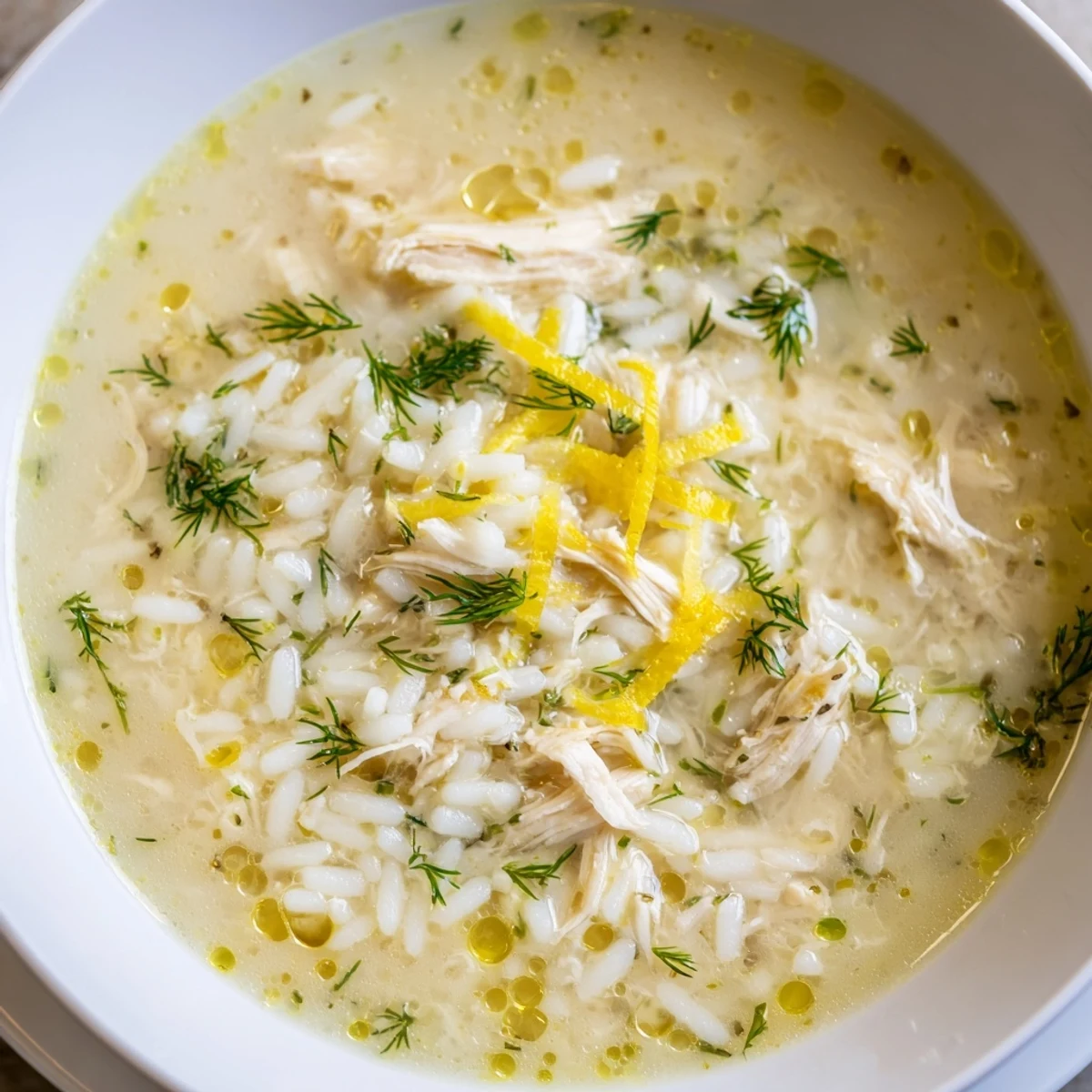
 There is something almost ceremonial about ladling this soup into wide, shallow bowls, the steam curling up and carrying that lemon fragrance straight to your nose. It became the dish my family requests the moment anyone sniffles, and I always oblige because making it feels less like cooking and more like wrapping everyone in a warm blanket.
The Rice versus Orzo Debate
I started with rice because that is what Elena used, but one restless evening I tossed in orzo instead and fell in love all over again. Orzo makes the soup feel a little more elegant, almost pasta like, and it soaks up the lemon broth in a way that feels distinctly different from rice. My advice is to try both and let your mood decide.
Choosing the Right Lemon
Not all lemons are created equal, and I learned this the hard way after using a batch of thick skinned, dull lemons that barely yielded any juice and tasted flat. Meyer lemons bring a sweeter, floral quality, while regular Eureka lemons give you that sharp, classic tang. Either works beautifully, but taste your juice first and adjust the amount based on how bold you want the flavor.
Serving and Storing Leftovers
This soup is best eaten the day it is made, when the texture is at its silkiest and the rice has not absorbed all the broth. Leftovers will thicken considerably in the fridge, but a splash of water or broth and gentle reheating on low heat brings it back to life. Do not microwave it on high, and never freeze it because the egg mixture will separate and break your heart.
- Reheat slowly on the stove over the lowest possible heat, stirring often.
- A knob of butter stirred in at the end adds a gorgeous richness that takes it over the top.
- Serve with crusty bread and a glass of crisp white wine if you want the full Greek taverna experience.
 Save to Pinterest
 Every pot of Avgolemono I make still reminds me of Elena and that rainy afternoon thermos, and I think that is the best thing a recipe can do. It feeds you, and then it stays with you.
Recipe Questions & Answers
- → How do I prevent the eggs from curdling?
-
Temper the eggs by slowly whisking a cup of hot broth into the beaten eggs and lemon, then gradually pour that mixture back into the pot over low heat. Keep the soup below a simmer to maintain a smooth, silky texture.
- → Can I substitute orzo for rice?
-
Yes. Use orzo in place of rice but add it later and reduce cooking time until al dente. Orzo absorbs more liquid, so watch consistency and add extra stock if needed.
- → Which chicken cut works best?
-
Boneless, skinless thighs give richer flavor and stay moist; breasts yield a leaner result. Either works—simmer until the internal temperature reaches 165°F, then shred or chop to add back to the broth.
- → How can I make this ahead and reheat it?
-
Make up to 2 days ahead. Chill quickly, then reheat gently over low heat. If the emulsion thickens, whisk in a little warm broth before serving to restore silkiness.
- → How much lemon should I use for balanced acidity?
-
Start with the suggested 1/3 cup (about 2 lemons) and taste after tempering. Add more in small increments if you want brighter acidity. Zest can be added sparingly for extra aroma.
- → Is this suitable for a gluten-free diet?
-
Yes—using rice and ensuring the chicken broth is gluten-free keeps the dish gluten-free. Always check labels on packaged ingredients like broth to be certain.