
 Save to Pinterest
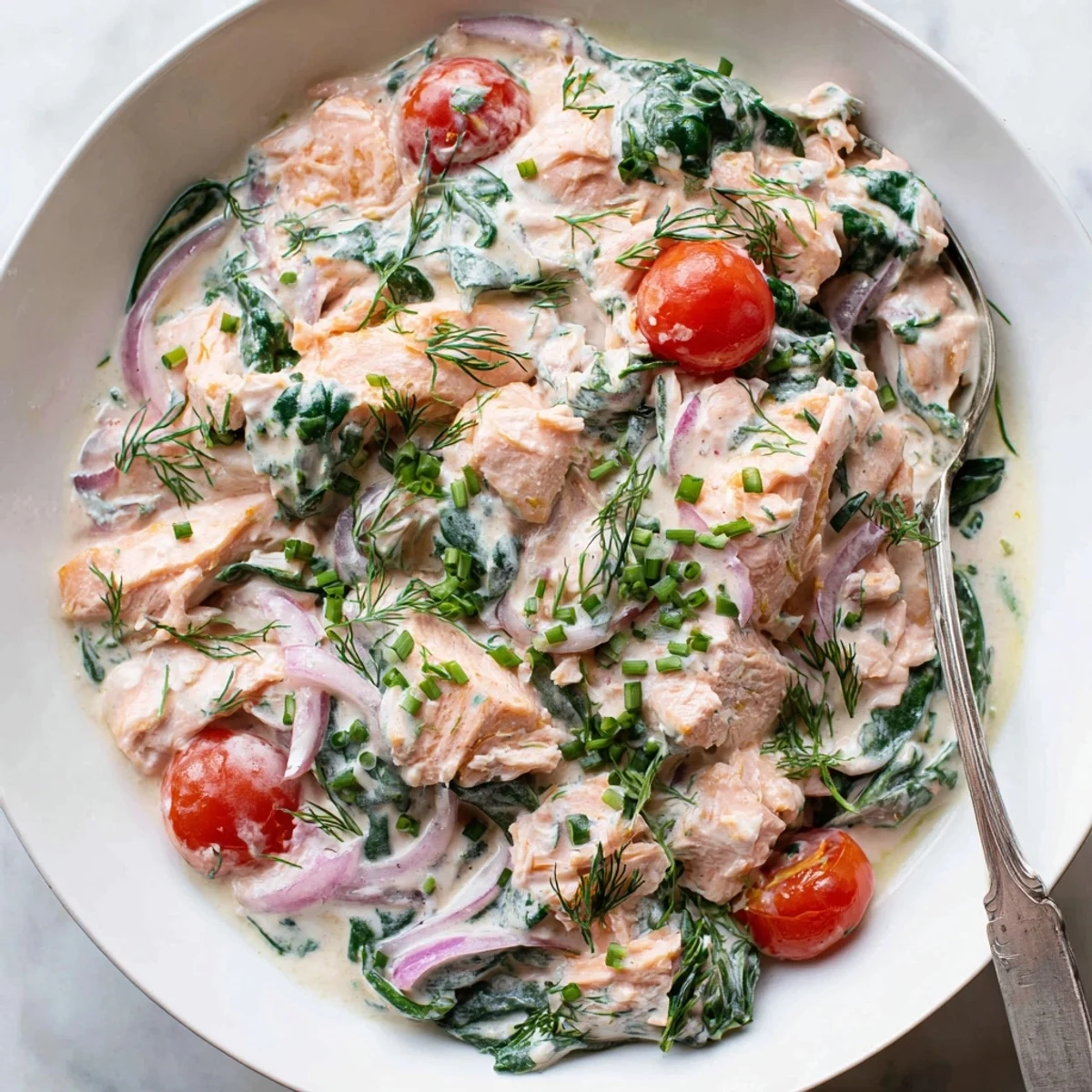
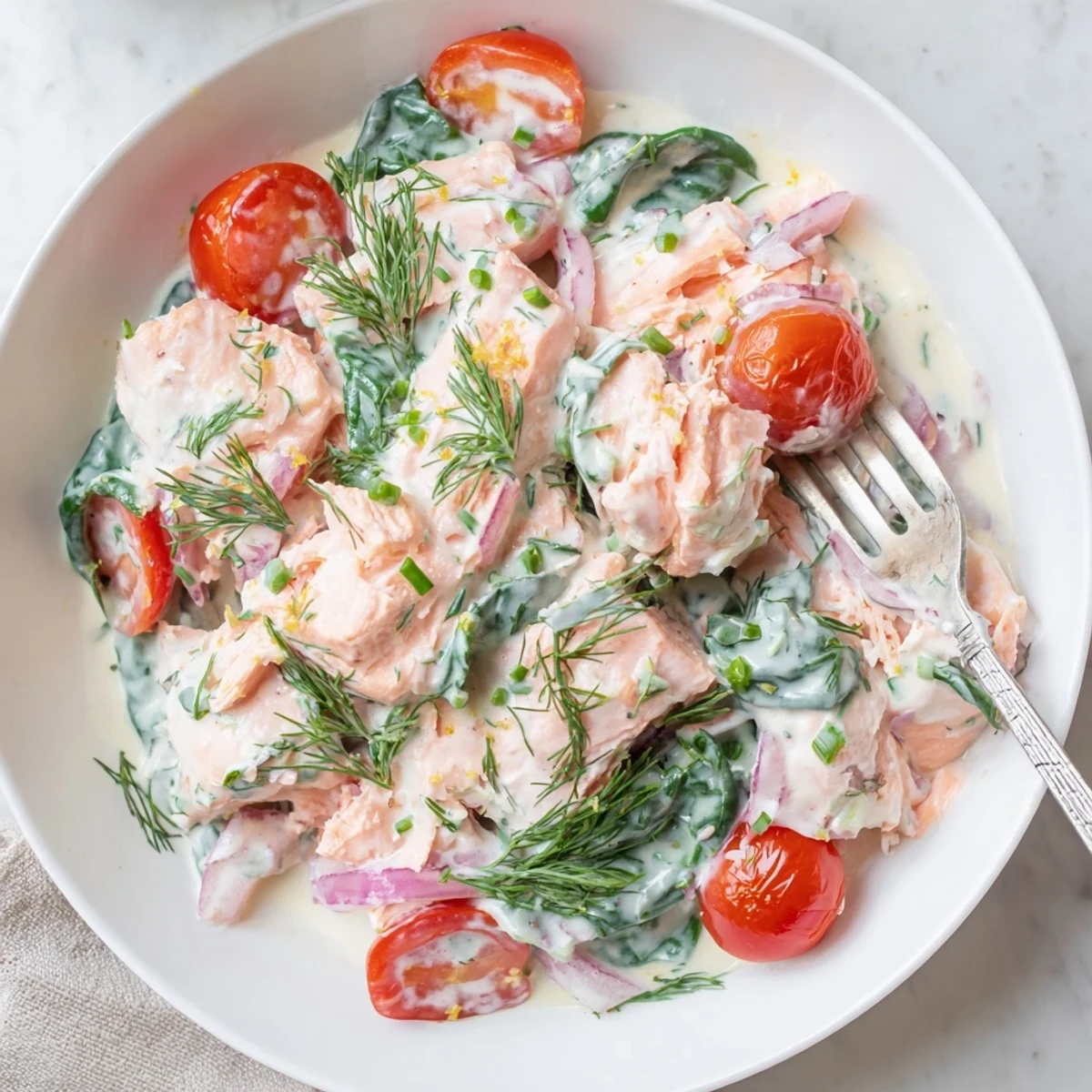
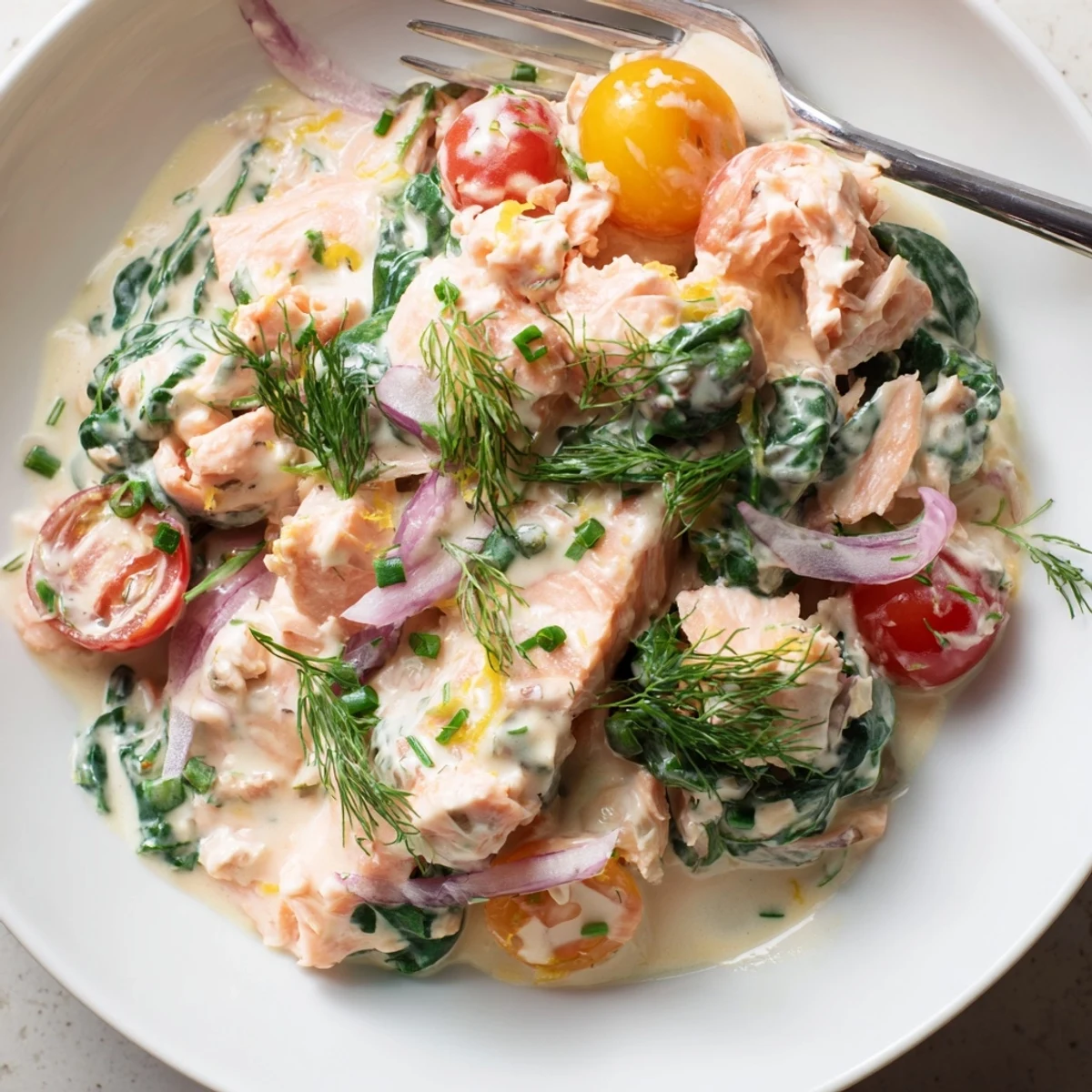
 This healthy creamy salmon skillet turns yesterday's cooked salmon into something completely new and satisfying. Flaked salmon is gently warmed in a velvety sauce made from Greek yogurt and light cream cheese, then brightened with fresh dill and lemon.
Baby spinach and cherry tomatoes add color and nutrients, while the whole dish comes together in just 25 minutes. It's naturally low in carbs and packed with protein, making it an excellent choice for a wholesome lunch or light dinner.
Serve it over quinoa, rice, or whole-grain pasta to round out the plate. It's also easily adaptable for dairy-free diets with plant-based substitutions.
There is something quietly satisfying about opening the fridge the day after a big salmon dinner and realizing you have exactly enough to make something even better than the original meal. The leftover fillet sits there waiting for a second act, and this creamy transformation is the answer I stumbled into on a rainy Tuesday when creativity was born from sheer laziness. Greek yogurt and cream cheese melt into a velvety sauce that makes you forget you are eating something virtuous. It is comfort food disguised as a smart choice, and it comes together before you can second guess dinner plans.
I made this for my neighbor once when she stopped by to return a borrowed casserole dish and ended up staying for dinner. She stood in the kitchen with a glass of wine, watching me fold the salmon into the sauce, and declared it smelled like something from a coastal restaurant we both love. We ate standing at the counter, plates balanced on the kitchen island, because it felt too casual to set the table. She now asks for the recipe every time I see her.
Ingredients
- Cooked salmon (2 cups, flaked): Leftover grilled or baked salmon works beautifully, and flaking it into chunky pieces keeps the texture satisfying rather than mushy.
- Greek yogurt (1/2 cup): This is the secret to creaminess without heavy cream, and the slight tang works wonders with the fish.
- Light cream cheese (1/4 cup, softened): Let it sit out for ten minutes so it blends smoothly instead of clumping in the pan.
- Baby spinach (1 cup, chopped): Wilted spinach adds color and nutrients without anyone noticing they are eating something green.
- Cherry tomatoes (1 cup, halved): They burst and release sweetness into the sauce, creating little pockets of brightness.
- Red onion (1/2 small, thinly sliced): A sharp bite that softens as it cooks and balances the richness of the dairy.
- Garlic (1 clove, minced): Just one clove is enough because you want warmth, not dominance.
- Low sodium broth (1/2 cup): Chicken or vegetable both work, and it thins the sauce to the perfect consistency.
- Fresh dill (1 tablespoon, chopped): Dill and salmon are old friends, and this herb brightens the whole dish with its clean, grassy flavor.
- Lemon zest and juice (1/2 teaspoon zest, juice of half a lemon): The zest brings fragrance while the juice adds the acidity that makes everything taste more alive.
- Salt and black pepper (1/4 teaspoon each): Season to taste at the end because the salmon and broth already contribute salt.
- Chives (2 tablespoons, chopped): A mild onion finish sprinkled on top just before serving that makes it look as good as it tastes.
Instructions
- Wake up the aromatics:
- Heat your non stick skillet over medium heat with a small splash of oil or broth, then slide in the sliced onion and minced garlic, stirring until the kitchen smells warm and inviting and the onion turns translucent, about two to three minutes.
- Bring in the color:
- Toss in the chopped spinach and halved cherry tomatoes, letting them cook for another couple of minutes until the spinach wilts down and the tomatoes soften and begin to release their juices into the pan.
- Build the creamy base:
- Pour in the broth and add the softened cream cheese and Greek yogurt, stirring steadily until everything melts together into a smooth, glossy sauce that coats the back of your spoon.
- Fold in the star:
- Gently add the flaked salmon along with the dill, lemon zest, lemon juice, salt, and pepper, folding carefully so the fish stays in tender chunks rather than breaking apart into flakes.
- Taste and serve:
- Give it a final taste and adjust the seasoning if needed, then spoon it hot onto plates, scatter the chives over the top, and serve over quinoa, rice, or pasta if you want something hearty underneath.
 Save to Pinterest
 One evening I packed the leftovers of this into a thermos for a beach picnic, and eating it cold with crusty bread while watching the sunset made me realize some dishes are bigger than the sum of their ingredients. It has been in my regular rotation ever since.
Making It Your Own
This recipe is wonderfully flexible once you understand the basic structure of protein, greens, and creamy binder. Swap the spinach for kale if you want something earthier, or throw in leftover roasted vegetables from the fridge for extra heft and fiber. I have even stirred in a handful of frozen peas at the end when I wanted a pop of sweetness and had nothing fresh on hand.
What to Serve Alongside
A dry white wine like Sauvignon Blanc is the natural pairing here, cutting through the creaminess with its crisp acidity. If you prefer something non alcoholic, a tall glass of sparkling water with a lemon wedge does almost the same job. For grain bases, quinoa adds a nutty chew that complements the soft salmon, but brown rice or whole wheat orzo are equally at home underneath.
Storing and Reheating
This keeps well in the refrigerator for up to two days in a tightly sealed container, though the texture is best on day one when the salmon chunks are still distinct. Reheat gently on the stove over low heat, adding a splash of broth to loosen the sauce if it has thickened too much overnight.
- Avoid the microwave if possible, because it tends to overcook the salmon and make the sauce uneven.
- If making ahead for meal prep, store the sauce and salmon separately from any grain base.
- Always taste for salt after reheating, since flavors tend to mellow when chilled.
 Save to Pinterest
 This is the kind of recipe that makes you look forward to having leftovers, which is really the highest praise I can give any dish. Keep it in your back pocket for the nights when you want something warm and nourishing without reaching for a delivery app.
Recipe Questions & Answers
- → Can I use canned salmon instead of leftover cooked salmon?
-
Yes, canned salmon works well. Drain it thoroughly and remove any large bones or skin before flaking. Reduce the cooking time slightly since canned salmon is already fully cooked and just needs to be warmed through.
- → How do I store and reheat leftovers?
-
Store any leftovers in an airtight container in the refrigerator for up to 2 days. Reheat gently in a skillet over low heat, adding a splash of broth to loosen the sauce. Avoid microwaving on high power, as this can cause the yogurt sauce to separate.
- → What can I substitute for Greek yogurt?
-
Reduced-fat crème fraîche is a great alternative. For a dairy-free version, use an unflavored plant-based yogurt such as cashew or almond-based. Silken tofu blended until smooth also works as a creamy base with a neutral flavor.
- → Can I add more vegetables to this dish?
-
Absolutely. Leftover roasted vegetables, sautéed mushrooms, zucchini, or bell peppers all pair nicely. Add heartier vegetables at the same time as the spinach so they have time to soften, and fold in delicate greens at the very end.
- → Is this dish gluten-free?
-
Yes, the salmon skillet itself is gluten-free when prepared with gluten-free broth. If serving over pasta, simply choose a gluten-free pasta variety. Always check broth labels, as some brands may contain wheat-based thickeners.
- → What wine pairs well with this creamy salmon dish?
-
A crisp, dry white wine like Sauvignon Blanc or Pinot Grigio complements the creamy sauce and lemon notes beautifully. The acidity cuts through the richness while enhancing the fresh dill and herb flavors in the dish.