
 Save to Pinterest
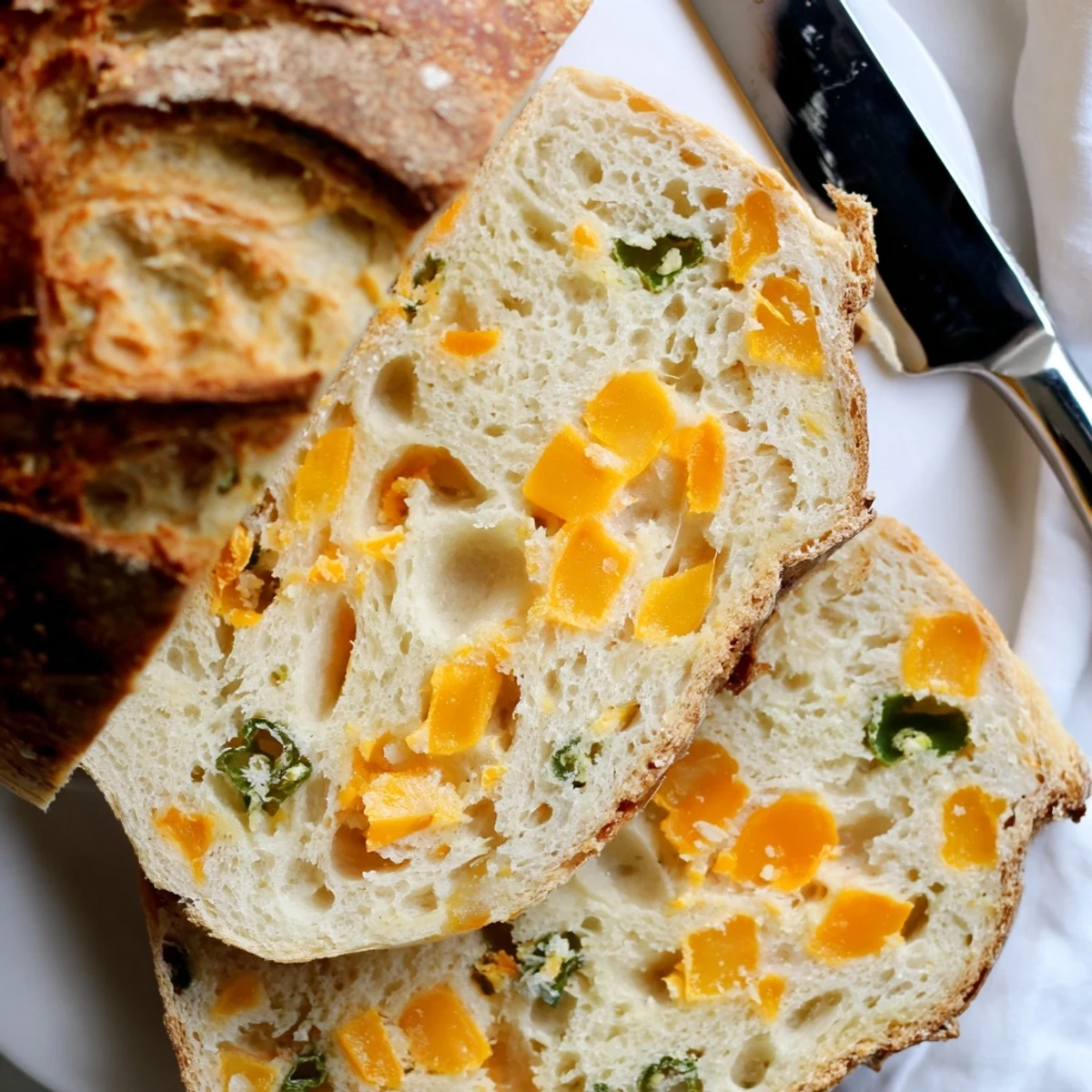
 This artisan loaf combines traditional sourdough techniques with bold flavors. The long fermentation creates that characteristic tang, while sharp cheddar adds creaminess throughout the crumb. Fresh jalapeños provide gentle heat that complements rather than overwhelms.
The process requires patience but rewards with bakery-quality results. Expect 8-24 hours total time, including fermentation periods that develop complex flavors and optimal texture. The Dutch oven method ensures professional steam-baking for an exceptional crust.
Perfect for toast, sandwiches, or enjoying warm with butter. The vegetarian loaf yields 8-10 generous slices and keeps well for several days.
The first time I pulled this bread from the oven, my entire apartment smelled like a bakery had moved in next door. My roommate actually came out of his room asking if I'd ordered takeout from that fancy artisanal place downtown.
I made this for a Super Bowl party once, and honestly, people were more excited about the bread than the actual game day spread. My friend Sarah, who swears she doesn't like spicy food, ate three slices and asked for the recipe before she even left.
Ingredients
- 500 g bread flour: High protein flour gives this loaf the structure it needs to hold all that cheesy goodness without collapsing
- 100 g active sourdough starter: Make sure it's bubbling and energetic before you start, this is the engine that drives both rise and flavor
- 350 ml water: Room temperature works best, cold water can shock your starter and slow everything down dramatically
- 10 g sea salt: Don't be tempted to reduce this, salt actually helps control fermentation and strengthens the gluten network
- 120 g sharp cheddar cheese: The sharpness cuts through the rich dough, and cubes create better cheese pockets than shredded cheese does
- 2 medium jalapeños: Removing most seeds keeps it approachable while still delivering that gentle heat that builds as you eat
Instructions
- Mix your base:
- Combine flour and water in a large bowl, mixing until no dry flour remains, then cover and walk away for 30 minutes to let the flour hydrate fully
- Add the living elements:
- Drop in your starter and sea salt, squeezing them through the dough with your fingers until everything feels evenly distributed
- Build strength:
- Perform four sets of stretch and folds every 15 minutes, grabbing one edge of the dough and pulling it up and over the center, rotating the bowl each time
- Fold in the flavor:
- After the final fold, turn your dough onto a lightly floured surface and gently press your cheese and jalapeños into the dough, folding it over itself a few times to distribute evenly
- Let it work:
- Cover your dough and let it rise at room temperature for 4 to 6 hours until it's noticeably puffy and full of gas bubbles
- Shape your loaf:
- Turn the dough out, fold the edges toward the center to create tension, then flip it over and rotate it on the counter to form a tight round
- Final proof:
- Place your shaped dough seam side up in a floured proofing basket, cover, and let it proof for 2 to 4 hours at room temperature or overnight in the fridge
- Get ready:
- Preheat your oven to 230°C with your Dutch oven inside so both are screaming hot when you're ready to bake
- Score and bake:
- Transfer your dough to parchment paper, make a confident slash across the top, then carefully lower it into your preheated Dutch oven
- Create that crust:
- Bake covered for 20 minutes to build steam, then remove the lid and continue baking for another 20 to 25 minutes until the crust is a deep golden brown
- Patience pays off:
- Cool on a wire rack for at least an hour before slicing, or the cheese will still be molten and the crumb will be gummy
 Save to Pinterest
 This bread has become my go to for housewarming gifts because it feels impressive but actually requires very little hands on time. Something about pulling a freshly baked cheese filled loaf out of the oven just makes people feel taken care of.
Working With Cheese In Dough
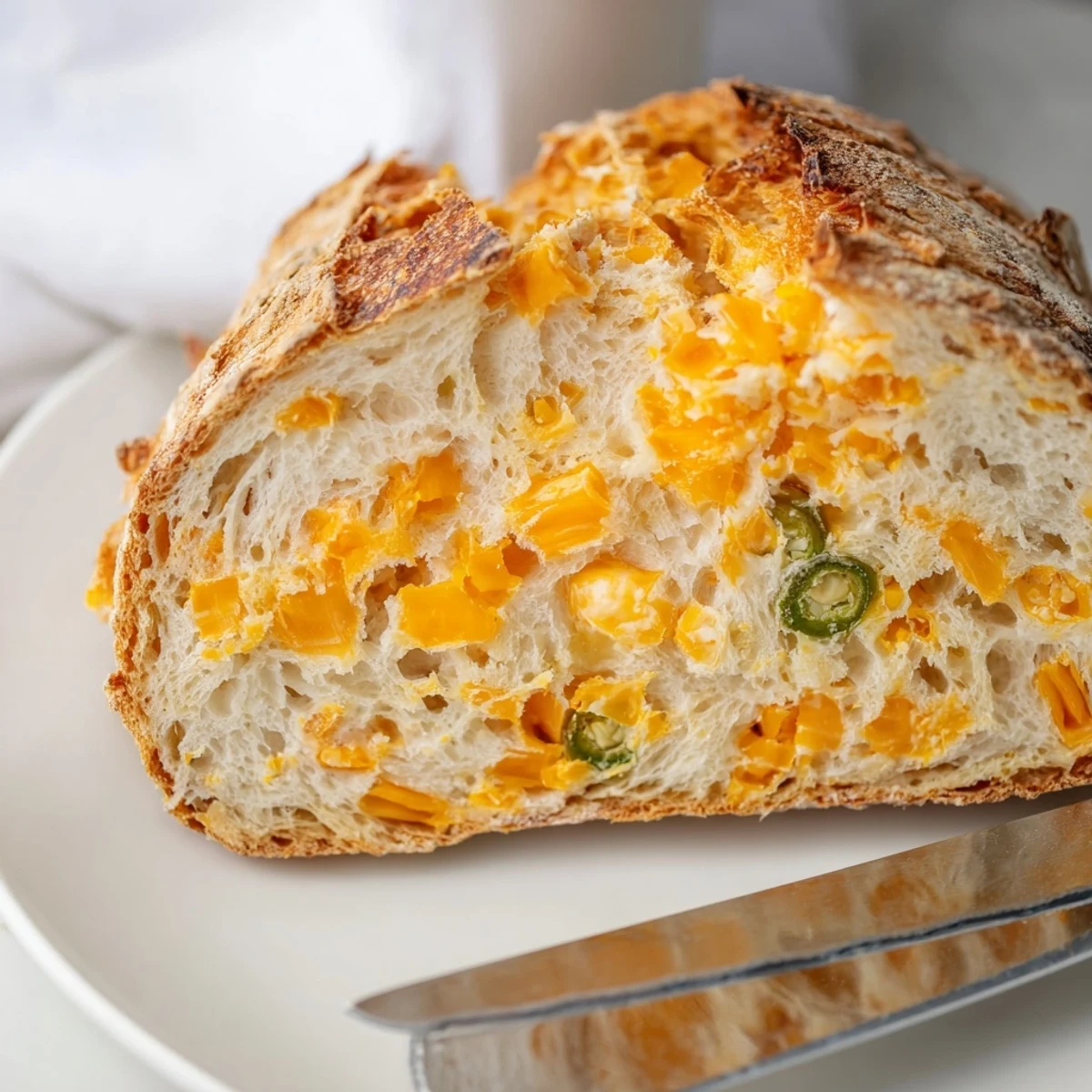
I've learned that cubing cheese instead of shredding it prevents it from completely disappearing into the dough. You get these distinct pockets of melted cheese throughout the loaf that way. Just don't make your cubes too large or they'll create holes in your crumb structure.
Timing Your Bake
The beauty of sourdough is that it works around your schedule once you understand how temperature affects fermentation. A warm kitchen speeds everything up, while the refrigerator essentially pauses the process so you can bake when it's convenient for you.
Getting That Professional Score
Your bread needs to expand somewhere, and scoring gives it a controlled path to do so. I use a sharp serrated knife at about a 45 degree angle, cutting about a half inch deep with one confident motion rather than sawing back and forth.
- Keep your knife or lame wet to prevent dragging through the tacky dough surface
- Score just before baking, not ahead of time, or the cut will heal back together
- A simple straight slash works perfectly for this style of round loaf
 Save to Pinterest
 There's something deeply satisfying about cutting into a loaf you've nurtured for hours, especially when that first slice reveals all those beautiful pockets of melted cheddar. Hope your kitchen smells as amazing as mine always does.
Recipe Questions & Answers
- → Can I reduce the jalapeño heat?
-
Absolutely. Remove all seeds and membranes from the jalapeños for milder flavor. You can also reduce to one pepper or substitute with bell peppers for no heat at all.
- → What if I don't have a Dutch oven?
-
Use a heavy cast iron pot with a tight-fitting lid, or create a steam tent by placing a metal bowl with ice cubes on the bottom rack of your oven while baking.
- → Can I use all-purpose flour instead of bread flour?
-
Yes, though bread flour provides better structure and chewiness due to higher protein content. All-purpose flour works but may yield slightly less substantial texture.
- → How should I store this loaf?
-
Store in a paper bag at room temperature for up to 3 days. For longer storage, slice and freeze in an airtight bag. Avoid refrigeration as it accelerates staling.
- → Can I make this without a sourdough starter?
-
You can substitute with commercial yeast, but you'll lose the characteristic tangy flavor. Use 7g instant yeast and reduce fermentation time to 2-3 hours.
- → Why is the total time so long?
-
Sourdough requires slow fermentation for proper flavor development and texture. The extended resting periods allow natural enzymes to break down starches, creating better digestibility and complex taste.