
 Save to Pinterest
 Cook and rinse sushi rice, fold in rice vinegar mixed with sugar and salt, then cool to room temperature to form the base. Arrange shredded surimi, sliced avocado, cucumber, carrot and nori over the rice; finish with spicy mayo, toasted sesame seeds, pickled ginger and soy on the side. Ready in about 40 minutes and serves four. Swap proteins or make it gluten-free as needed.
My apartment kitchen has exactly enough counter space for one cutting board and one wrong move, which is why I started making California rolls in bowl form instead of trying to wrestle with bamboo mats at ten o clock on a Tuesday night.
My friend Dani walked in while I was splitting open an avocado and said it smelled like a sushi bar in my kitchen, which was the best compliment I never asked for.
Ingredients
- Sushi rice (one and a half cups): The foundation of everything, so do not skip rinsing it until the water runs clear or you will end up with gummy clumps instead of distinct tender grains.
- Water (two cups): Measured precisely for the rice because eyeballing it here leads to heartbreak.
- Rice vinegar (three tablespoons): This is what makes sushi rice taste like sushi rice, that gentle tang you associate with every good roll you have ever had.
- Sugar (one tablespoon): Just enough to round out the vinegar without making anything taste sweet.
- Salt (one teaspoon): Dissolved into the vinegar mixture so it distributes evenly through every grain.
- Imitation crab sticks, two hundred grams: Shredded or roughly chopped, these are the soul of a California roll and far more practical than trying to source fresh crab on a weeknight.
- One large avocado: Sliced into creamy strips, it provides the richness that holds the whole bowl together.
- One medium cucumber: Thinly sliced or julienned for a cool crunch that breaks up the soft textures.
- Two sheets nori: Cut into thin strips or small squares, scattered on top for that unmistakable ocean scent.
- Two tablespoons toasted sesame seeds: A final sprinkle that adds a nutty finish and visual polish.
- Four tablespoons mayonnaise, preferably Kewpie: The base for spicy mayo, and Kewpie makes a real difference with its richer yolk content.
- One tablespoon sriracha: Optional, but it transforms the mayo into something you will want to drizzle on everything.
- One small carrot, julienned: Optional, but adds a beautiful pop of orange and a slight sweetness.
- Pickled ginger: Served on the side for cleansing the palate between bites.
- Soy sauce: For finishing, served alongside so everyone can adjust their own salt level.
Instructions
- Rinse and cook the rice:
- Run the sushi rice under cold water, swishing it with your hand, until the water turns from cloudy to nearly clear, then combine it with two cups of water in a saucepan, bring it to a boil, drop the heat to low, cover, and cook for fifteen minutes before pulling it off the burner to steam under its own lid for another ten.
- Season the rice:
- Stir the rice vinegar, sugar, and salt together in a small bowl until the solids disappear, then gently fold this mixture into the cooked rice using a cutting motion rather than stirring, and let it cool to room temperature so the grains firm up and absorb the seasoning.
- Mix the spicy mayo:
- Combine the mayonnaise and sriracha in a small bowl, tasting as you go, because the heat level is entirely personal and you can always add more but you cannot take it back.
- Build each bowl:
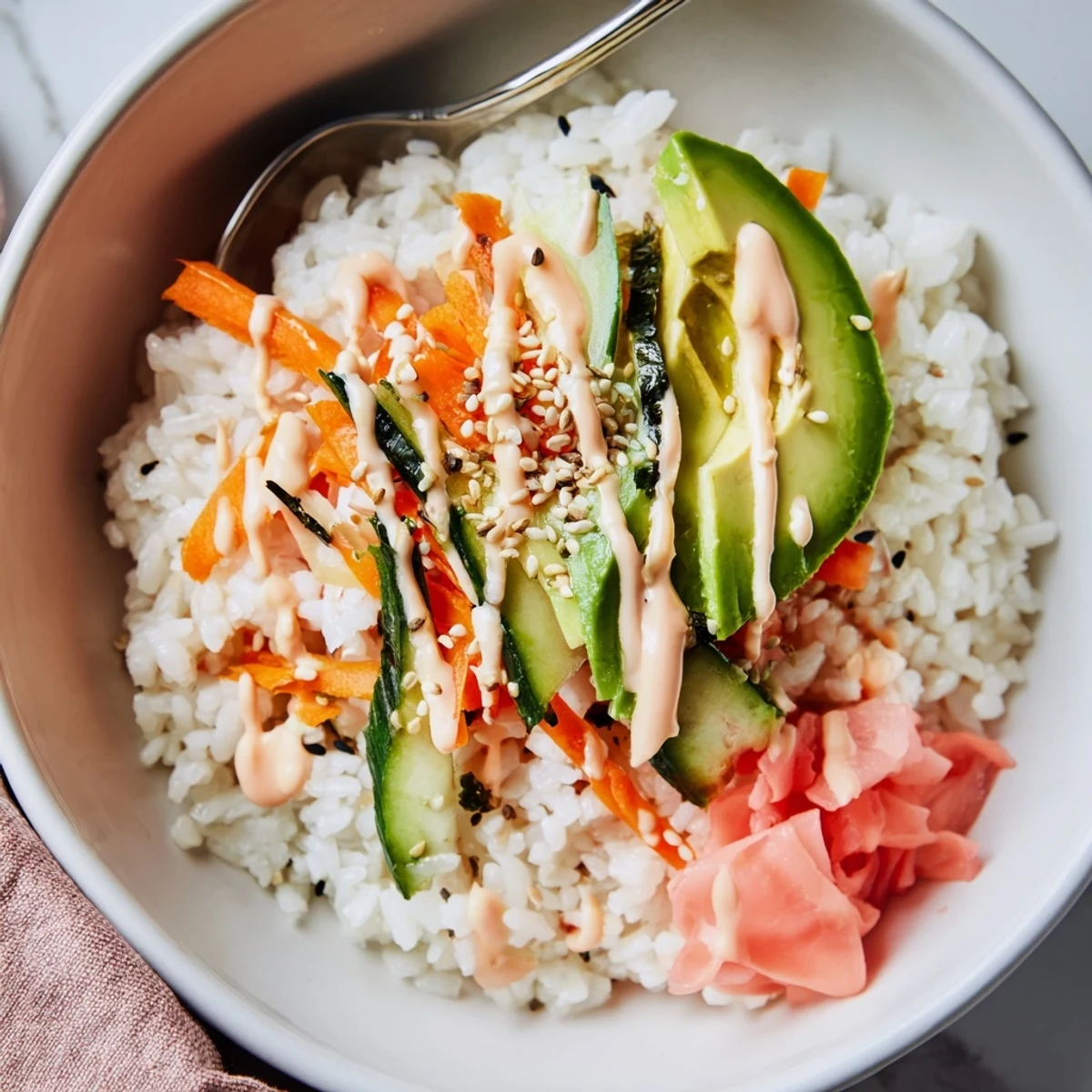
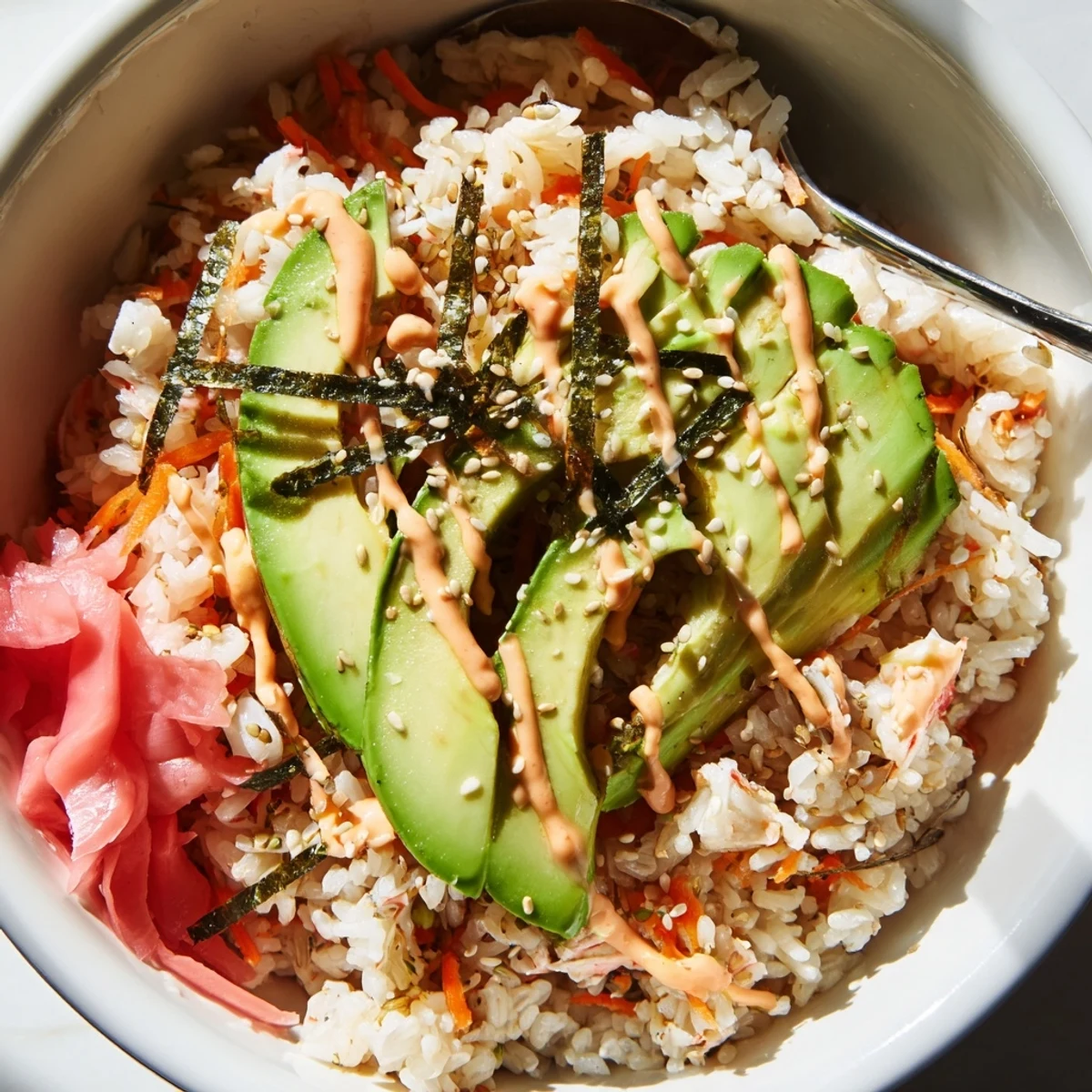
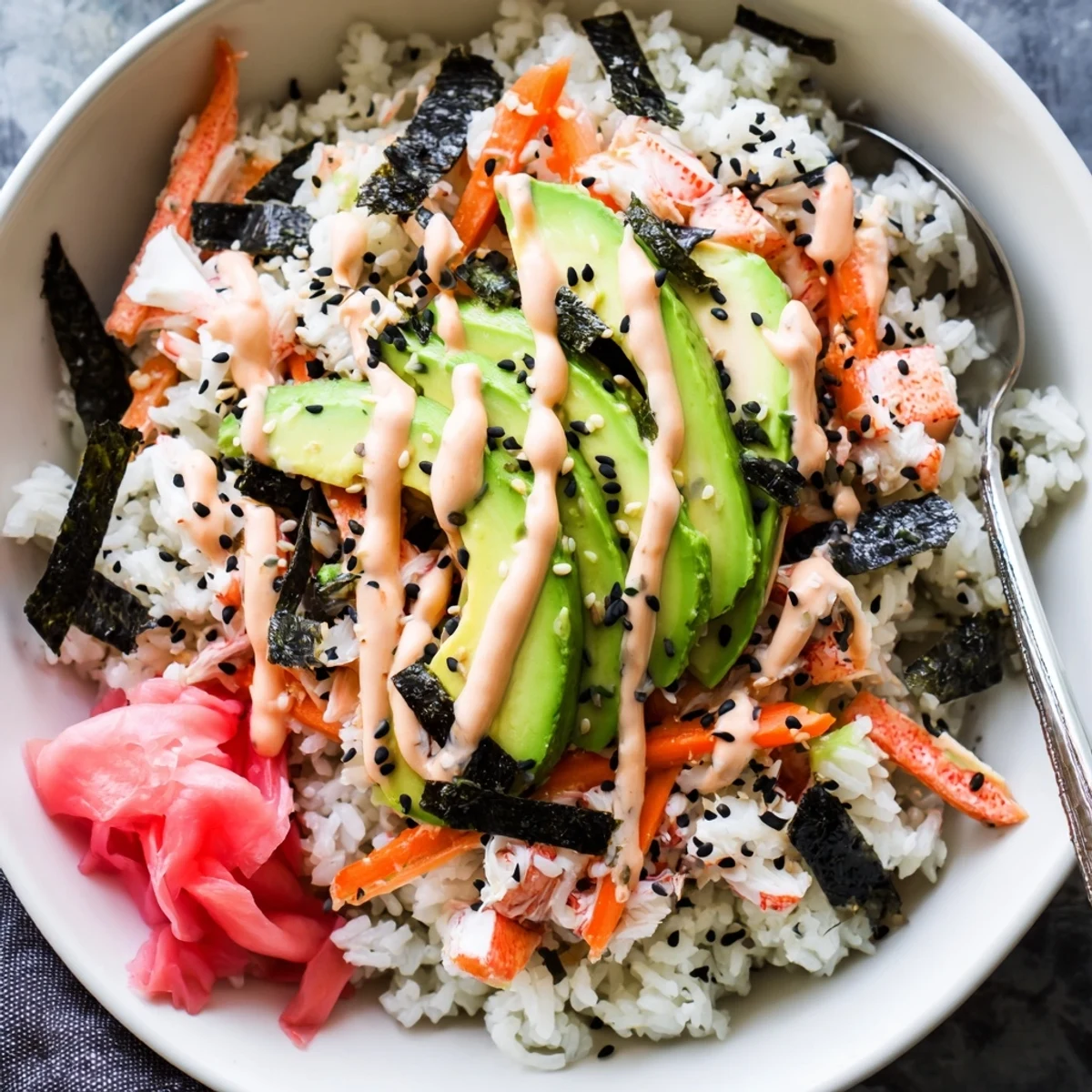
- Lay down a generous bed of seasoned rice, then arrange the shredded crab, avocado slices, cucumber, julienned carrot, and nori strips in neat sections on top, like you are painting a small edible landscape.
- Finish and serve:
- Drizzle the spicy mayo across the top, scatter the toasted sesame seeds, and set out pickled ginger and soy sauce so everyone can season their own bowl at the table.
 Save to Pinterest
 The first time I set these bowls out for dinner, nobody reached for their phone to take a photo, they just picked up their chopsticks and went quiet, which is the highest rating any meal can receive in my home.
Swaps and Substitutions
You can absolutely swap the imitation crab for real cooked crab, sauteed shrimp, or cubed tofu if you want to take it in a different direction, and the bowl will still taste like it was planned that way.
Making It Your Own
Try adding sliced radishes for a peppery bite or a handful of edamame for extra protein and color, because the bowl format is forgiving and rewards experimentation.
Serving and Storing
These bowls are best assembled right before eating, but you can prep each component separately and keep them in the fridge for up to two days, which makes them an excellent candidate for a build your own sushi bowl night.
- Store the rice separately with a damp paper towel pressed against the surface to keep it from drying out.
- Keep the avocado slices in a container with a squeeze of lemon juice to slow the browning.
- Always assemble just before serving for the freshest texture and brightest flavor.
 Save to Pinterest
 Some evenings call for sushi restaurant vibes without leaving the house, and this bowl delivers exactly that with nothing more than a saucepan and a sharp knife.
Recipe Questions & Answers
- → How do I get fluffy sushi rice?
-
Rinse until the water runs clear to remove excess starch, then simmer gently with a tight-fitting lid. Let the rice rest off heat for 10 minutes before seasoning and cooling to room temperature for best texture.
- → What ratio of rice vinegar to sugar and salt should I use?
-
Mix about 3 tablespoons rice vinegar with 1 tablespoon sugar and 1 teaspoon salt for 1½ cups uncooked sushi rice; adjust slightly to taste for balanced tang and sweetness.
- → Can I substitute the imitation crab (surimi)?
-
Yes — swap for cooked real crab, poached shrimp, smoked salmon or firm tofu for a pescatarian or vegetarian option. Choose a firmer protein if you plan to reheat leftovers.
- → How do I keep avocado from browning in the bowls?
-
Slice avocado just before serving and toss lightly with a squeeze of lemon or lime to slow oxidation. Storing assembled bowls tightly covered and chilled helps but is best eaten soon after assembly.
- → How can I make a gluten-free version?
-
Use gluten-free soy sauce or tamari and check the surimi label for wheat ingredients. Many surimi brands contain gluten, so choose certified gluten-free alternatives or swap with shrimp or crab.
- → What are good serving and pairing suggestions?
-
Serve with pickled ginger, extra soy or tamari and a chilled crisp white wine or sake. Add edamame or sliced radish for extra freshness and texture contrast.