
 Save to Pinterest
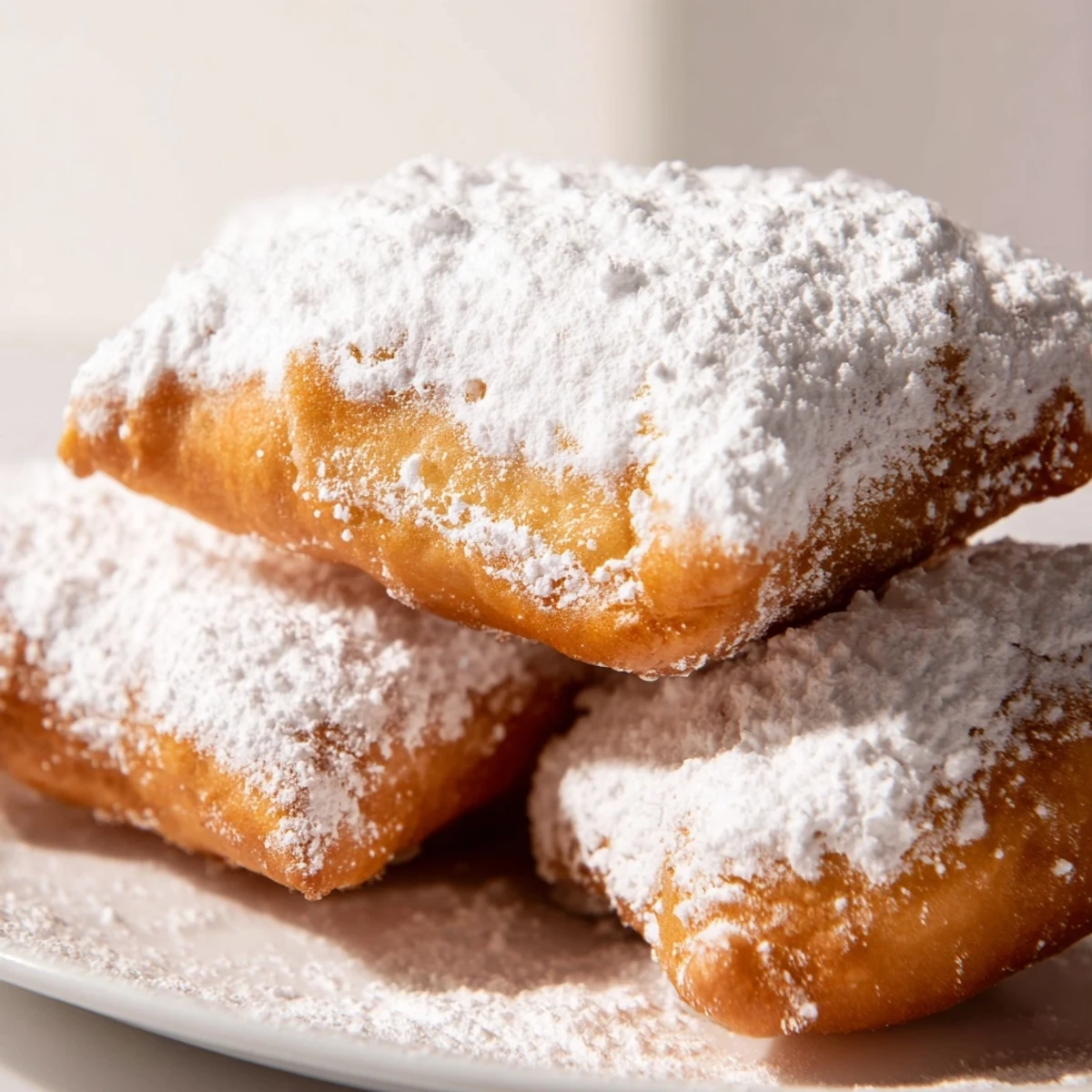
 Create these light, pillowy French beignets delicately flavored with vanilla and dusted with powdered sugar. This classic treat requires patience for the dough to rise properly, resulting in perfectly golden, puffed pastries. The dough combines flour, sugar, yeast, milk, eggs, butter, and vanilla for authentic flavor. After rising twice, the squares are fried until golden brown and generously coated with powdered sugar while still warm. Best enjoyed fresh from the fryer with optional dipping sauces like jam, chocolate, or honey.
The first time I bit into a warm beignet in New Orleans, powdered sugar puffed up like a tiny snowstorm around me. I came home determined to recreate that magic in my tiny apartment kitchen. It took several batches of flat, dense disappointments before I understood what makes these cloud-like puffs truly special.
Last winter, my neighbor smelled these frying through our shared wall and knocked on my door with a nervous smile. We stood at the counter eating them warm with steam still rising, sugar coating our fingers, talking about her grandmothers Sunday morning traditions. Now she texts me every time she sees beignets on a menu.
Ingredients
- All purpose flour: Provides the structure that lets these puff up beautifully without becoming tough
- Granulated sugar: Just enough to balance the savory notes and help browning
- Active dry yeast: The magic behind that pillowy texture, give it time to bloom properly
- Salt: Crucial for flavor balance, do not skip it
- Whole milk: Creates richness and tenderness, make sure it is lukewarm not hot
- Warm water: Activates the yeast, think bath temperature comfortable on your wrist
- Large eggs: Adds structure and richness, bring them to room temperature first
- Unsalted butter: Melted and cooled gives flavor without interfering with the dough structure
- Pure vanilla extract: The subtle fragrant backbone that makes these feel special
- Vegetable oil: Needs a high smoke point for proper frying without any off flavors
- Powdered sugar: The essential finishing touch, apply generously while still warm
Instructions
- Wake up the yeast:
- Stir warm water with yeast in a small bowl and watch for the foamy layer that tells you it is alive and ready to work.
- Combine the dry ingredients:
- Whisk flour, sugar, and salt together in your stand mixer bowl so everything is evenly distributed before the wet ingredients join.
- Mix the dough:
- Add the yeast mixture, milk, eggs, melted butter, and vanilla, then let the dough hook work for 5 to 7 minutes until the dough is smooth and slightly tacky.
- Let it rise:
- Place the dough in an oiled bowl, cover it tightly, and find a warm corner where it can double in size over the next hour or so.
- Roll and cut:
- Punch down the risen dough, turn it onto a floured surface, and roll to half inch thickness before cutting into 2 inch squares.
- Second rise:
- Arrange the squares on parchment paper, cover them gently, and let them puff up again for 30 minutes while you heat the oil.
- Heat the oil:
- Bring your vegetable oil to 350 degrees Fahrenheit in a heavy pot, using a thermometer to be precise since temperature matters.
- Fry to golden:
- Cook the beignets in small batches for 1 to 2 minutes per side until they are golden brown and floating, giving them space to puff properly.
- Dust and serve:
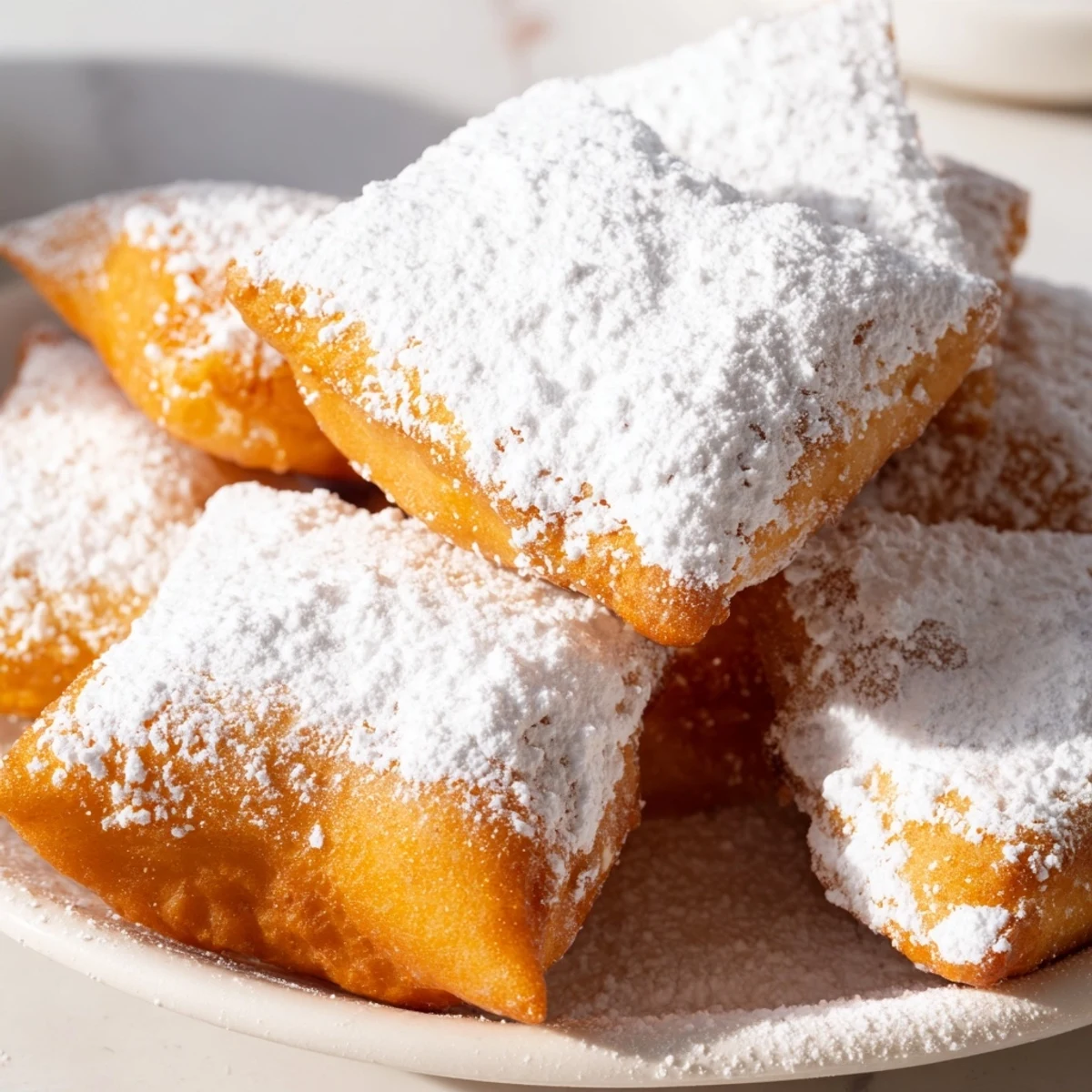
- Let them drain briefly on paper towels then coat generously with powdered sugar while they are still warm and ready to melt the sugar slightly.
 Save to Pinterest
 These became my daughters birthday morning tradition after she tasted them at age six and declared them better than cake. Now every year, she wakes up early to help cut the squares, her small hands dusted with flour, waiting by the stove for the first golden batch to emerge.
Getting The Rise Right
I learned the hard way that cold drafts are the enemy of fluffy beignets. Find the warmest spot in your kitchen, maybe near a preheating oven or in a sunny window, and let the dough do its work undisturbed. The wait feels long but the texture difference is worth every minute.
Frying Like A Pro
Keep your oil temperature steady between batches, adjusting the heat as needed because crowded oil cools down quickly. I use a clip on thermometer now after too many batches that were either raw inside or burnt outside.
Serving Suggestions
While powdered sugar is classic, a warm chocolate ganache takes these into dessert territory. Sometimes I split them and fill with raspberry jam for an unexpected surprise inside.
- Try lemon zest in the dough for a bright spring variation
- Pair with strong coffee or hot chocolate for the perfect balance
- Eat them immediately, they do not keep well but rarely last long anyway
 Save to Pinterest
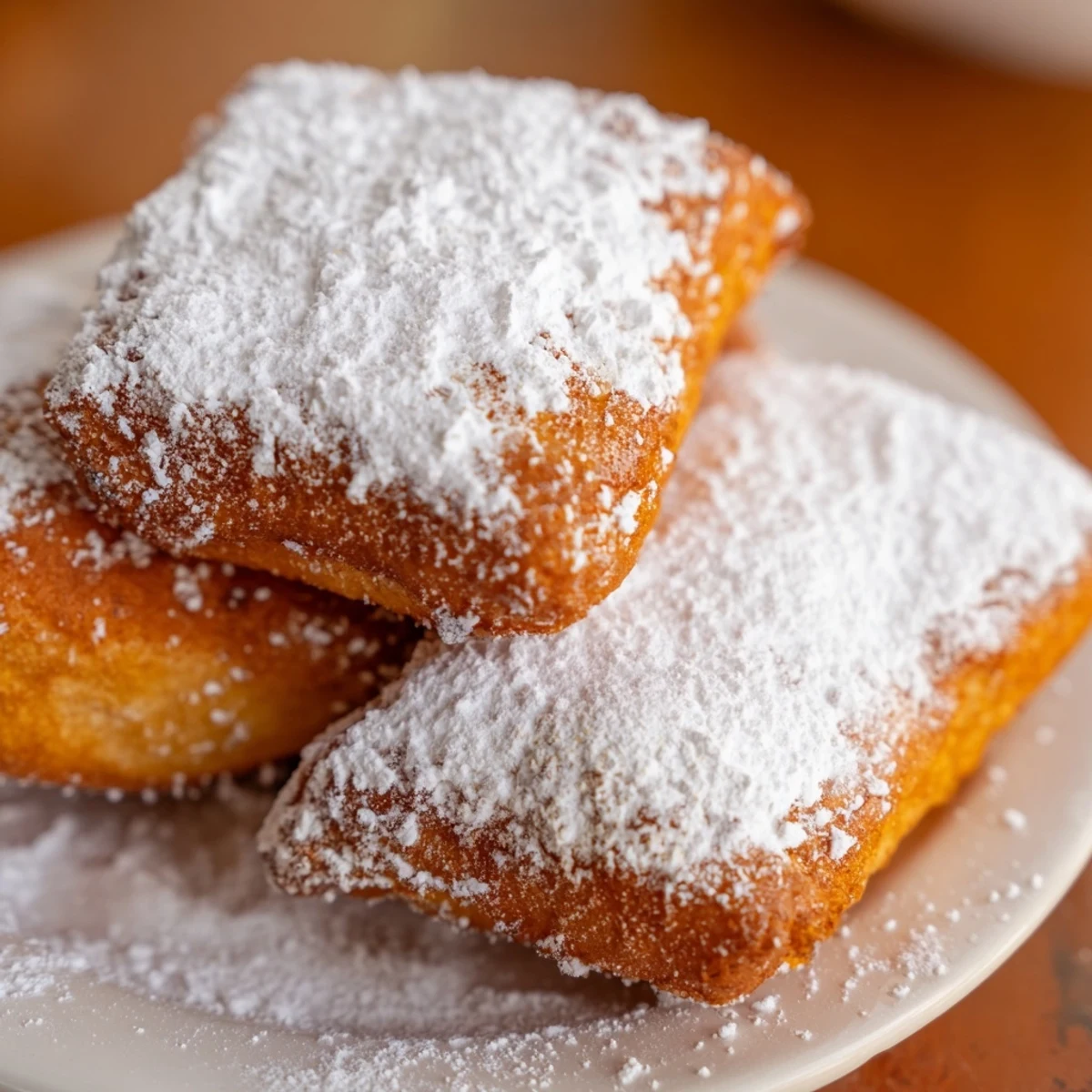
 There is something profoundly satisfying about making these from scratch, turning simple ingredients into something that feels like celebration. Share them while they are hot and watch the powdered sugar snow begin.
Recipe Questions & Answers
- → How do I know when the oil is hot enough for frying?
-
Use a kitchen thermometer to verify the oil reaches 350°F (175°C). If you don't have one, drop a small piece of dough into the oil — it should sizzle immediately and rise to the surface within seconds.
- → Can I make the dough ahead of time?
-
Yes, prepare the dough and refrigerate it after the first rise. Let it come to room temperature before rolling and frying. The dough can be stored overnight for convenience.
- → Why didn't my beignets puff up during frying?
-
This usually happens when the oil isn't hot enough or the dough didn't rise properly. Ensure the oil temperature stays at 350°F (175°C) and allow adequate rising time in a warm, draft-free area.
- → Can I bake these instead of frying?
-
While baking is possible, it won't produce the authentic texture and flavor. Traditional beignets require deep frying to achieve the characteristic crisp exterior and soft, airy interior.
- → How should I store leftover beignets?
-
Beignets are best enjoyed fresh and warm. If needed, store in an airtight container at room temperature for up to one day. Reheat briefly in a 350°F oven for 3-5 minutes to restore crispness.
- → What can I serve with beignets?
-
Serve plain with generous powdered sugar dusting, or offer dipping sauces like raspberry jam, warm chocolate sauce, or honey. Coffee, café au lait, or hot chocolate make perfect accompaniments.