
 Save to Pinterest
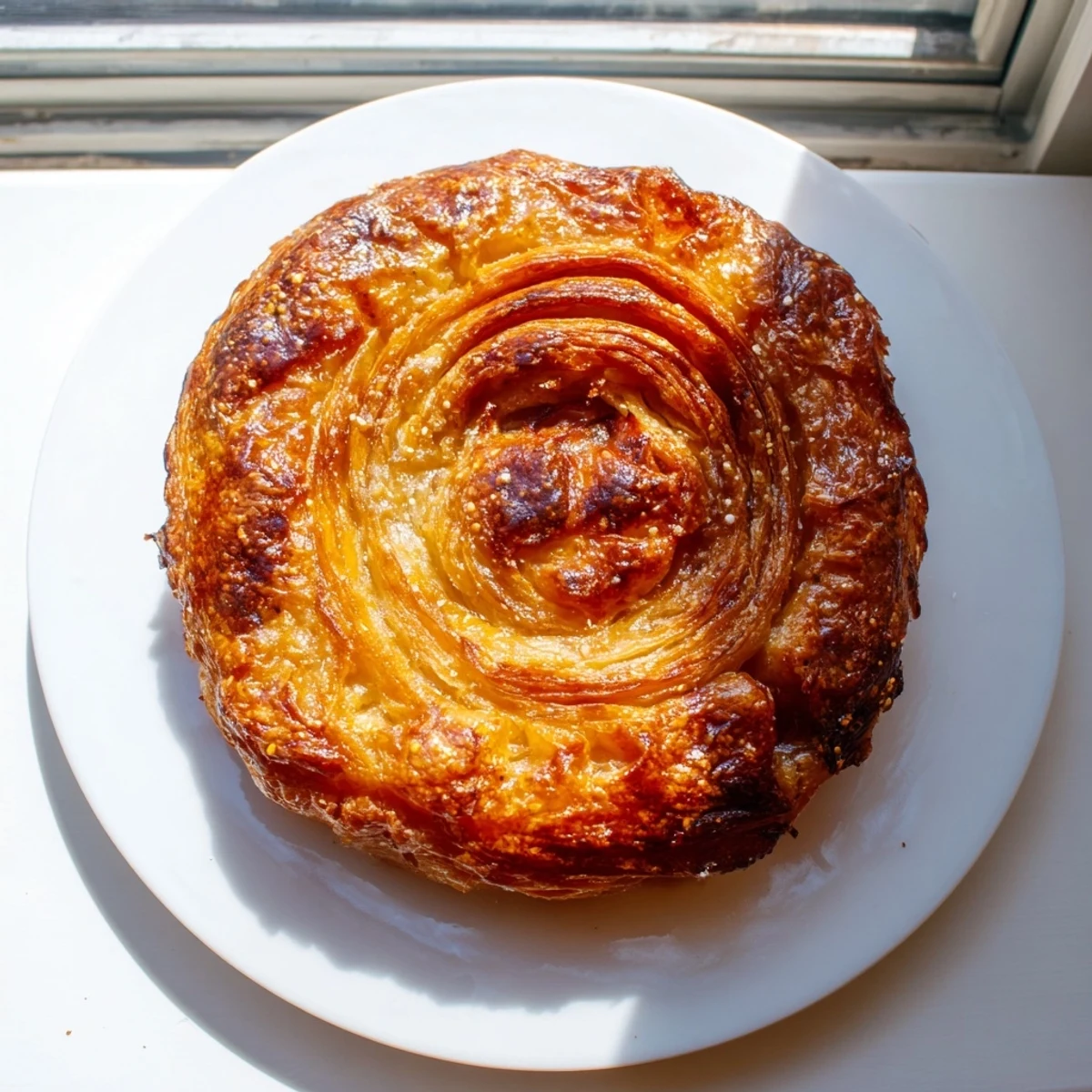
 Kouign Amann translates to "butter cake" in Breton, originating from Brittany, France. This pastry achieves its signature texture through lamination—folding butter and sugar into dough multiple times to create delicate layers. During baking, sugar caramelizes against the butter, forming a crisp, golden exterior while the interior remains tender and flaky.
The process requires patience: dough rises, butter is pounded into a square, then the two are combined through a series of rolling and folding turns. Each turn incorporates more sugar, ensuring even caramelization throughout. The final bake transforms the pale dough into a deeply bronzed, aromatic masterpiece that's best enjoyed fresh from the oven.
High-quality European-style butter is essential here—its higher fat content creates superior lamination and richer flavor. The result balances sweetness with savory butter notes, creating an unforgettable pastry experience.
The first time I tasted kouign amann, I was standing in a tiny bakery in Dinard, France, where the salt air mixed with butter and caramel. The pastry chef laughed when I asked what made it so special, simply pointing to a block of butter and saying, Everything. That afternoon I watched her fold and turn the dough with practiced hands, creating layers that would become shatteringly crisp. I've been chasing that memory ever since.
Last winter, during a snowstorm that kept us inside for days, I decided to finally tackle kouign amann. My roommate wandered in every hour to check on the doughs progress, inevitably staying to watch each fold. When we finally pulled the golden brown pastry from the oven, steam rising in ribbons, we ate it standing up at the counter with snow falling outside the window. Some things dont need ceremony.
Ingredients
- All-purpose flour: Creates structure while keeping the pastry tender
- Fine sea salt: Essential for balancing the intense sweetness
- Instant dry yeast: Gives the dough enough rise without overpowering the butter layers
- Lukewarm water: Should feel like bath temperature, about 95°F
- European style butter: Higher fat content creates better lamination and flavor
- Granulated sugar: Creates the signature caramelized crust throughout the layers
Instructions
- Mix and knead the dough:
- Combine flour, salt, and yeast in a large bowl. Add lukewarm water and mix until shaggy, then knead on a lightly floured surface for 5 to 7 minutes until smooth and bouncy. Cover with a clean towel and let rise in a warm spot for 1 hour until doubled.
- Prepare the butter block:
- Pound cold butter between parchment papers into a 6 inch square, keeping it cold but pliable. Refrigerate until firm but not rock hard, about 20 minutes.
- Encase the butter:
- Roll risen dough into a 12 inch square on floured surface. Place butter square diagonally in center, fold dough edges over butter to completely encase it, and pinch seams tightly to seal.
- First fold with sugar:
- Roll dough into a 16 by 8 inch rectangle. Sprinkle one third of sugar evenly over surface, fold into thirds like a letter, wrap in plastic, and chill for 30 minutes.
- Second fold:
- Rotate dough 90 degrees, roll out again to 16 by 8 inches, sprinkle with another third of sugar, fold into thirds, wrap and chill 30 minutes more.
- Final fold:
- Roll out once more, sprinkle with remaining sugar, fold into thirds, wrap and chill for final 30 minutes. Meanwhile butter and sugar a 9 inch round cake pan thoroughly.
- Shape and final rise:
- Roll chilled dough into a 14 inch circle. Fold edges inward to form a rough square, flip over seam side down, and gently press into prepared pan. Cover loosely and let rise 30 to 45 minutes until puffy.
- Bake to perfection:
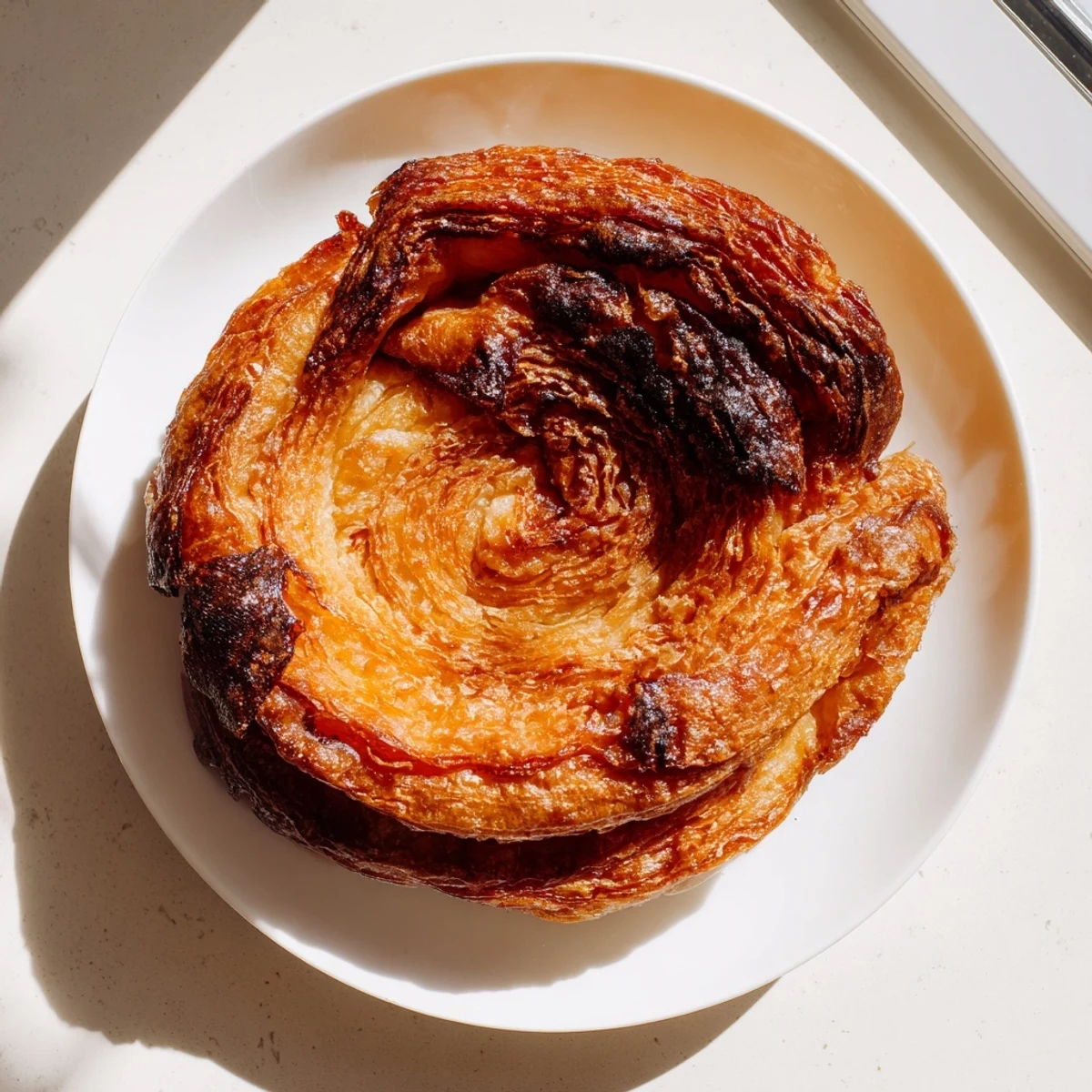
- Preheat oven to 400°F. Bake for 30 to 35 minutes until deep golden brown with caramelized sugar bubbling up the sides. Cover with foil if browning too quickly.
- Cool and serve:
- Let cool in pan for exactly 5 minutes, then invert onto wire rack immediately. Waiting longer will cause the caramelized sugar to stick to the pan.
 Save to Pinterest
 My grandmother used to say that pastry was half technique, half patience. Watching the kouign amann rise that first time, smelling butter and sugar fill the whole house, I finally understood what she meant. These pastries have become my go to gift for new neighbors, a way of saying welcome without words.
Working with the Dough
The dough will feel slack and sticky compared to other laminated pastries, which is completely normal. Resist adding too much flour during rolling or youll lose tenderness. Work quickly but gently, letting the parchment paper help you lift and fold when things get sticky.
The Butter Matters
Ive made this with regular butter and with high fat European style, and the difference is remarkable. The higher butterfat content creates more distinct layers and deeper caramelization. Its worth seeking out good butter for something this special.
Troubleshooting Your Kouign
If your butter breaks through the dough during rolling, pop everything in the fridge for 15 minutes and continue. The pastry is done when its deeply golden with sugar bubbling up the sides, not just lightly browned. Most importantly, dont let it cool too long in the pan.
- Underbaked kouign amann will be doughy in the center
- Spraying the pan with nonstick spray creates a strange texture compared to butter
- Room temperature butter is the enemy of successful lamination
 Save to Pinterest
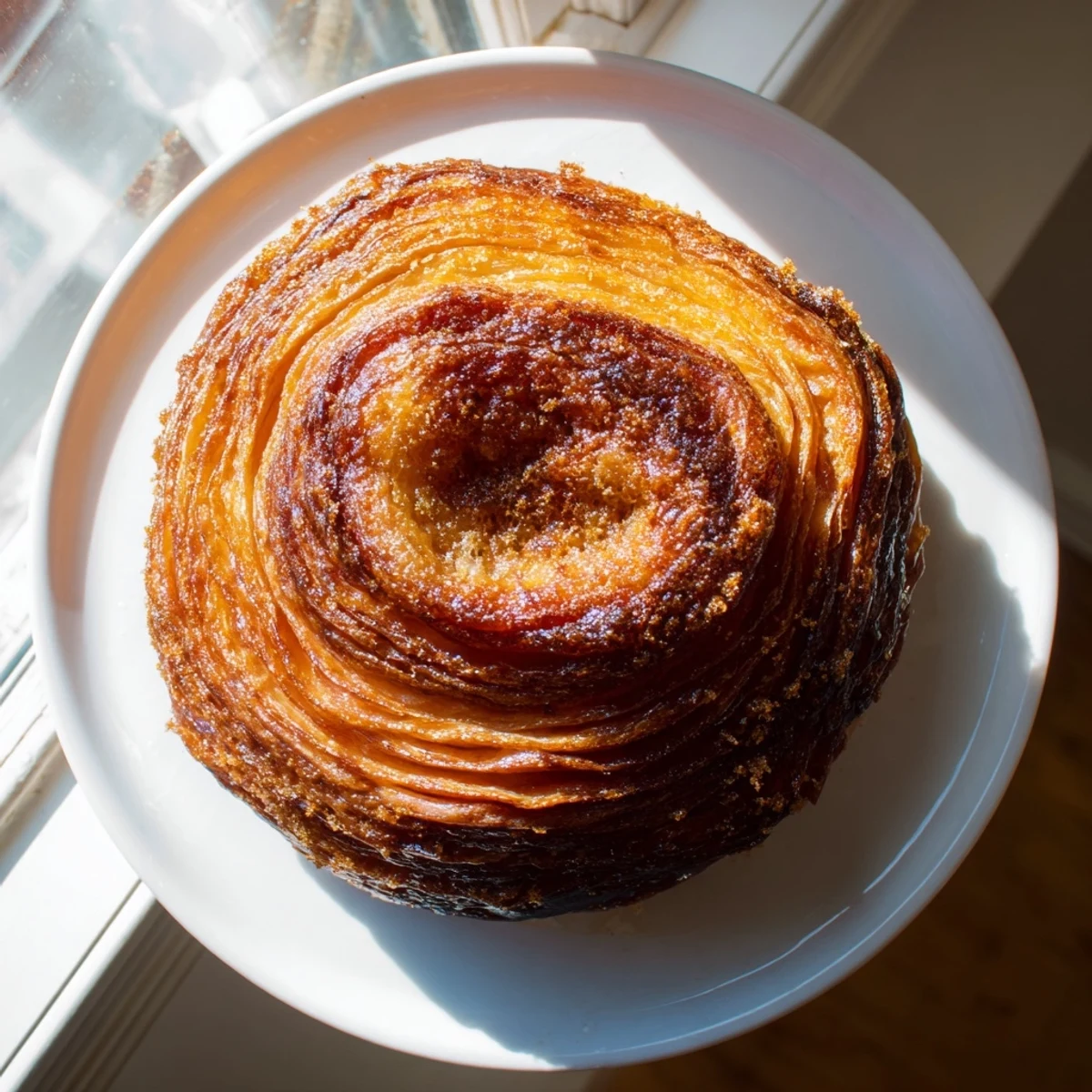
 There is something deeply satisfying about pulling a perfectly caramelized kouign amann from the oven, the kitchen filled with butter and sugar. Share it with someone you love, preferably while still warm.
Recipe Questions & Answers
- → What makes Kouign Amann different from croissants?
-
Kouign Amann incorporates sugar directly into the laminated layers, while croissants rely solely on butter. The sugar caramelizes during baking, creating a crisp, sweet exterior and deeper golden color. Croissants remain lighter and less sweet, focusing primarily on buttery flavor and flaky texture without the caramelized crunch.
- → Can I make Kouign Amann ahead of time?
-
The dough can be prepared through the lamination steps and refrigerated overnight before the final rise and baking. However, Kouign Amann is best enjoyed the same day it's baked—the caramelized crust softens over time. If storing, reheat gently in a 350°F oven for 5-7 minutes to restore some crispness.
- → Why did my butter leak out during baking?
-
Butter leakage typically occurs when the dough becomes too warm during lamination. Keep everything chilled, working quickly during rolling and folding. If butter feels soft or greasy, wrap the dough and refrigerate for 15-20 minutes before continuing. Proper chilling ensures butter stays in distinct layers rather than melting into the dough.
- → What's the purpose of turning and folding the dough?
-
Each turn creates additional layers of butter and sugar between thin sheets of dough. Three turns typically yield 27 distinct layers. This lamination process, combined with sugar in each fold, ensures even distribution of caramelization throughout the pastry. The technique originated with traditional Breton bakers and remains unchanged today.
- → Can I use salted butter instead of adding salt separately?
-
Yes, salted European-style butter works well. Simply omit the additional salt in the butter layer. Salted butter enhances the overall flavor profile, balancing sweetness with savory notes. Many traditional Breton versions incorporate salted butter, which reflects Brittany's renowned butter production and adds depth to the final pastry.
- → How do I know when Kouign Amann is properly baked?
-
Properly baked Kouign Amann reaches a deep golden brown color, almost bronze in appearance. The pastry should feel firm when tapped, and sugar should be visibly caramelized around the edges. If the top browns too quickly, tent with foil during the final minutes. Underbaking results in doughy layers without proper caramelization.